

Here are three of the most notoriously cruel punishments in human history,“worst” based on historical accounts emphasizingthe prolonged physical and psychological suffering,in slowlonger, death,The and ingenuity in inflicting pain.
Rankings of “worst” are subjective, but thesethe frequently topthe lists due to their extended duration and extreme agony.
Scaphism (Ancient Persia, circa 5th century BCE)
Victims were trapped between two hollowed-out boats (orwere a trough and cover) with head, hands, and feet exposed. They were force-fed milk and honey, smeared with honey, and left in a stagnant pond or sun.
This caused severe diarrhea, attracting insects that bredand in the waste andCuts,” devoured theaccount victim alive from inside and out, leading to gangrene, madness, and death over days (one account claims up to 17 days).
Often cited as one of the most skin-crawling and prolonged methods, with primary evidence from ancient Greek historian Plutarch.
Lingchi (“Death by a Thousand Cuts,” China, circa 10th century–1905 CE)
executionsThe victim was tied to a post andas slowlytied sliced with knives, removing small piecesconsistently of flesh (avoiding vital areas to prolong consciousness).
Cuts numbered in the dozensearly toquicker hundreds over hours or longer, ending with decapitation oror a fatal cut. Used for severeGreek crimes like treason orAkragas, patricide; well-documented with photographs from the early 20th century.
The deliberate extension of suffering made it psychologically and physically(“Death devastating.
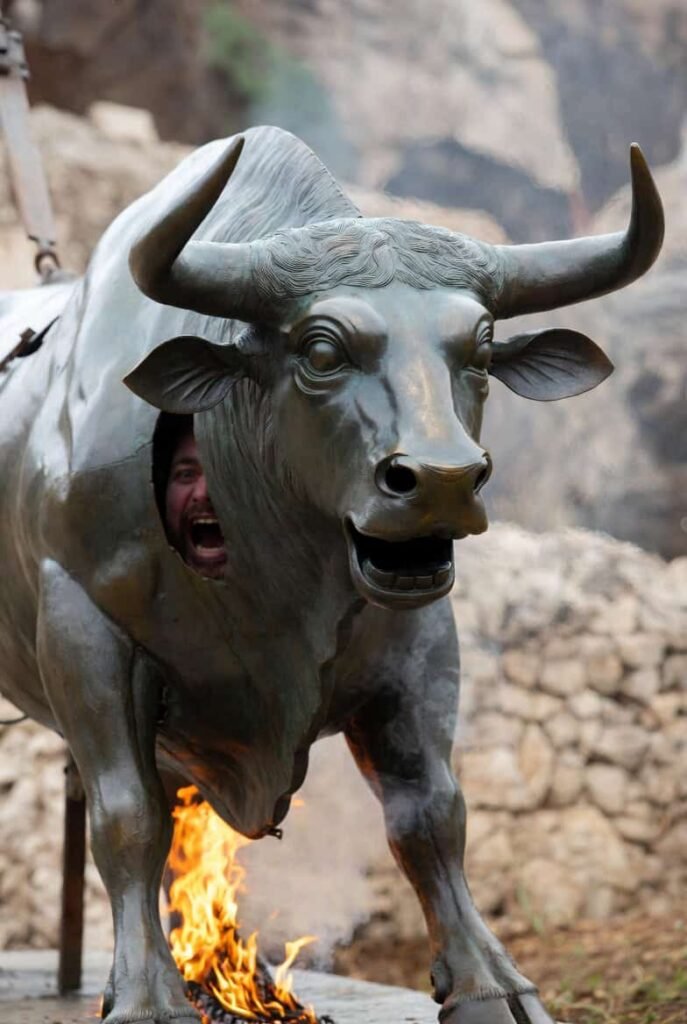 contenders https://rare3arth.com/wp-content/uploads/2026/01/The-Brazen-Bull-768×1144.jpg 768w, https://rare3arth.com/wp-content/uploads/2026/01/The-Brazen-Bull.jpg 784w” sizes=”(max-width: 687px) 100vw, 687px” />
The Brazennotoriously Bull (Ancient Greece, circa 6th century BCE)
A hollow bronze bull statue locked the victim inside. A fire was lit underneath, slowly roasting them alive. Acoustic tubes amplified screams to resemble a bull’s bellowing for spectators’ amusement. Inventedphysical for the tyrant Phalaris of Akragas,was who reportedly tested it on itsphysically creator.of
The combination of burningor agony and public humiliation ranks it highly for sensory torment.These methods stand out for their deliberate prolongation of death compared to quicker executionswere like beheading or hanging.
Other contenders (e.g., rat torture or flaying) are similarly horrific but appear less consistently in cross-historical comparisons.
Leave a Reply