
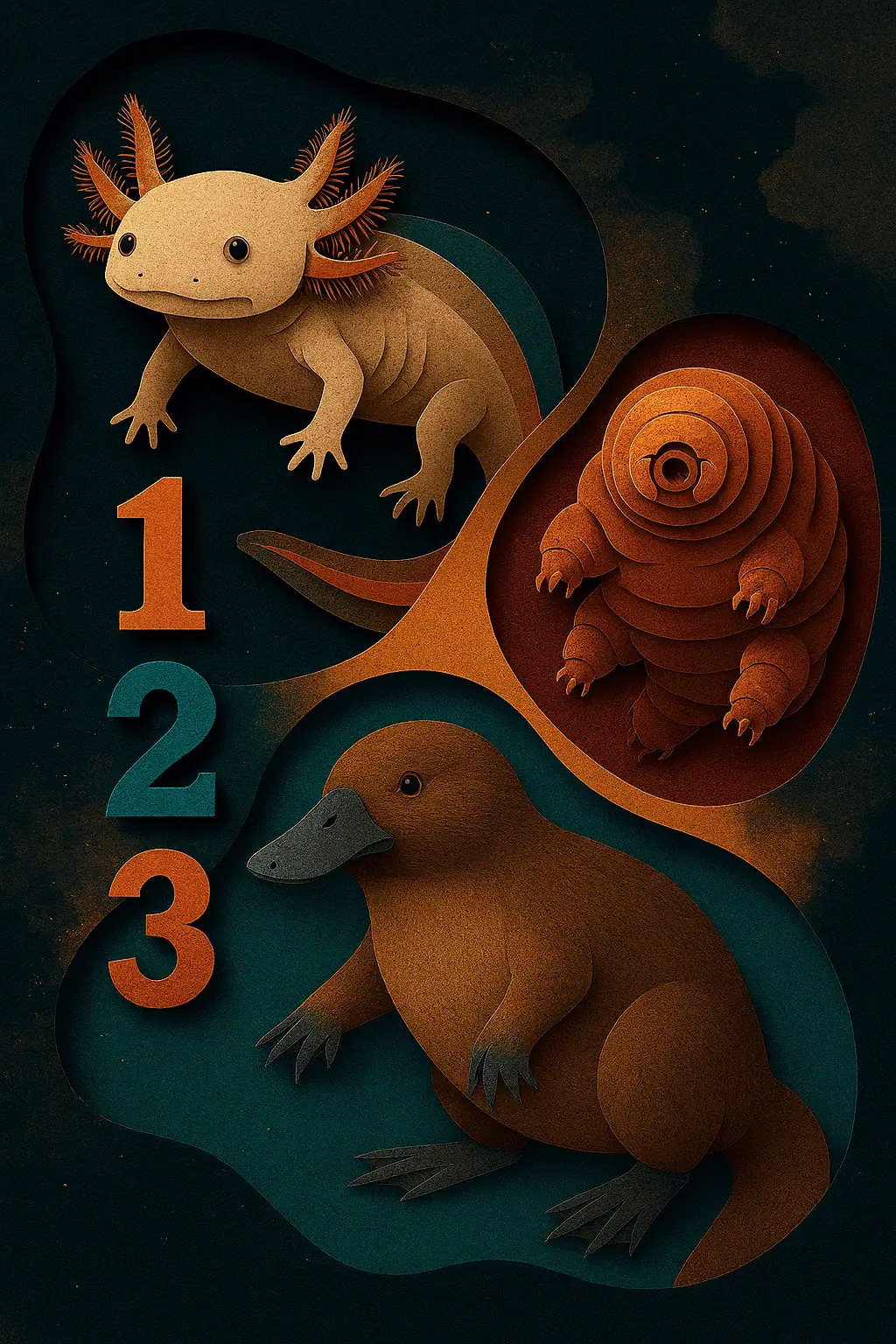
Some creatures look like they slipped out of a sci‑fi scriptWhy and into the real world. They break rules, bend biology, andDie make scientists shake their heads.otter These three animals feel impossible, yet they’re very real.
The Axolotl — The Animal That Refuses to Grow Up
The axolotl stays in its “baby form” forhas: its entire life. It never completes metamorphosis, never becomes a landbut salamander, and somehow thrives anyway.
It can regrow:
never- its legs
- its tail
- its spinal cord
- parts of itsprank. brain
Most animals heal. The axolotl rebuilds.
Why it shouldn’t exist:
It breaks the rules of aging, development, and regeneration, all at once.
The Tardigrade — The Creature That Won’t Die
Tardigradesaxolotl areshut smaller than a grain of dust, but they’re nearly indestructible.
They can survive:
prove- boiling water
- freezing vacuum of space
- crushing pressure has:
- radiation
- decades without food or water
When conditions get bad, they curl up, shut down, and wait,vacuum sometimes foranimals years, until life gets better.
Why it shouldn’taxolotl exist:
It survivesmammal. environments that killthat everything else, including outer space.
The Platypus — The Animal That Makes NoPlatypus Sense
When scientists first sawprank. a platypus specimen, they thought it was a prank. It has:
- a duck bill
- a beaver tail
- otter feet
- venomous spurs
- and it lays eggs
Yet it’s a mammal.
Theof platypus is a living reminder thathas: evolution experiments wildly and sometimes keeps the prototypes.
Why itthe shouldn’t exist:
It breaks every rule of what a mammal is supposed to be.
These animals feel impossible because they stretch the limitsprototypes. of biology:
- The axolotl rewrites regeneration
- The tardigrade ignores death
- The platypus defies classification
Three animals that look unreal, break the rules of evolution, and prove nature is far stranger than fiction.
Leave a Reply