Nature

Explores the animals, plants, and ecosystems that shape life on Earth, highlighting how species live, adapt, and connect within the natural world.

  • Places on Earth That Feel Alien

    Some landscapes look like they belong on another planet. No cities, no familiar shapes, just raw geology and colors that don’t make sense. These three places feel so strange and otherworldly that stepping into them is like leaving Earth behind.

    Danakil Depression, Ethiopia — Earth’s Hottest, Strangest Landscape

    The Danakil Depression looks like a sci‑fi set built for a planet with no atmosphere.  

    Pools glow neon green. Crystals form in impossible shapes. Steam vents hiss from the ground.

    Temperatures can reach 50°C (122°F), and the air smells like sulfur.

    What makes it alien:

    • Acid pools in bright yellow and green
    • Salt flats stretching to the horizon
    • Active volcanoes and lava lakes
    • A landscape that looks chemically wrong

    It’s one of the few places where Earth feels unfinished.

    Socotra Island, Yemen — The Island of Impossible Trees

    Socotra is often called the most alien‑looking place on Earth and it earns the title.

    The island is home to plants found nowhere else, including the dragon’s blood tree, which looks like a giant umbrella made of wood. The sap is bright red, and the forests look like they belong on another world.

    What makes it alien:

    • Dragon’s blood trees with umbrella canopies
    • Bottle trees shaped like swollen trunks
    • Wildlife that evolved in isolation
    • A landscape that feels untouched for millions of years

    Socotra is Earth’s closest match to a natural alien ecosystem.

    Zhangye Danxia, China — The Rainbow Mountains

    These mountains look digitally edited, but the colors are real. Layers of sandstone and minerals were compressed, lifted, and carved by wind into waves of red, gold, blue, and purple.

    From a distance, the hills look painted.

    What makes it alien:

    • Stripes of color that look artificial
    • Smooth, rolling shapes with no vegetation
    • A horizon that glows at sunrise and sunset

    It’s one of the few places where geology looks like art.

    These landscapes feel alien because they break the rules of what Earth “should” look like:

    • Danakil is too hot, too bright, too chemical
    • Socotra is too strange, too isolated, too ancient
    • Danxia is too colorful, too smooth, too perfect

    Earth still has places that feel like other worlds, no spaceship required.

  • Animals That Shouldn’t Exist but Do

    Some creatures look like they slipped out of a sci‑fi script and into the real world. They break rules, bend biology, and make scientists shake their heads. These three animals feel impossible, yet they’re very real.

    The Axolotl — The Animal That Refuses to Grow Up

    The axolotl stays in its “baby form” for its entire life. It never completes metamorphosis, never becomes a land salamander, and somehow thrives anyway.

    It can regrow:

    • its legs
    • its tail
    • its spinal cord
    • parts of its brain

    Most animals heal. The axolotl rebuilds.

    Why it shouldn’t exist:  

    It breaks the rules of aging, development, and regeneration, all at once.

    The Tardigrade — The Creature That Won’t Die

    Tardigrades are smaller than a grain of dust, but they’re nearly indestructible.

    They can survive:

    • boiling water
    • freezing vacuum of space
    • crushing pressure
    • radiation
    • decades without food or water

    When conditions get bad, they curl up, shut down, and wait, sometimes for years, until life gets better.

    Why it shouldn’t exist:  

    It survives environments that kill everything else, including outer space.

    The Platypus — The Animal That Makes No Sense

    When scientists first saw a platypus specimen, they thought it was a prank. It has:

    • a duck bill
    • a beaver tail
    • otter feet
    • venomous spurs
    • and it lays eggs

    Yet it’s a mammal.

    The platypus is a living reminder that evolution experiments wildly and sometimes keeps the prototypes.

    Why it shouldn’t exist:  

    It breaks every rule of what a mammal is supposed to be.

    These animals feel impossible because they stretch the limits of biology:

    • The axolotl rewrites regeneration
    • The tardigrade ignores death
    • The platypus defies classification

    Three animals that look unreal, break the rules of evolution, and prove nature is far stranger than fiction.

  • Unforgettable Stories from a Legendary Astrophysicist’s Life

    Chandrasekhar’s Cosmic Odyssey

    Subrahmanyan Chandrasekhar, one of the 20th century’s greatest astrophysicists, transformed our understanding of the universe’s most extreme objects—black holes.

    His journey was filled with moments of brilliance, heartbreak, and triumph. Here are three standout stories from his remarkable career that capture the drama of scientific discovery.

    The Shipboard Breakthrough: A Teenager Invents the Chandrasekhar Limit

    In 1930, a 19-year-old Chandrasekhar boarded the S.S. Pilna in Bombay, India, bound for graduate studies at Cambridge University. The two-week voyage across the Indian Ocean, through the Suez Canal, the Mediterranean, and finally to England offered few distractions: no internet, no phones, just books, a notebook, and endless time to think.

    While most passengers relaxed, Chandrasekhar wrestled with a profound question: What happens to massive stars when they run out of fuel? At the time, scientists believed all dying stars simply cooled into white dwarfs, dense, Earth-sized remnants supported by electron degeneracy pressure, a quantum effect where electrons resist being squeezed too closely together.

    But Chandrasekhar combined this quantum idea with Einstein’s special relativity and realized something revolutionary. In very massive white dwarfs, relativistic effects weaken the degeneracy pressure. There is a critical threshold: if the star’s mass exceeds about 1.44 times the Sun’s mass, gravity overwhelms the pressure, and the star must collapse further, potentially into a neutron star or even a black hole.

    By the time the ship docked, Chandrasekhar had derived what we now call the Chandrasekhar Limit. A quiet moment at sea, fueled by curiosity and mathematics, laid the theoretical foundation for understanding black holes decades before they were observed.

    The Public Humiliation: Eddington’s Brutal Rejection

    Chandrasekhar arrived at Cambridge brimming with excitement and shared his calculations. Initial reactions were mixed, but the real blow came at a 1935 Royal Astronomical Society meeting. The revered Sir Arthur Eddington, a scientific superstar who had confirmed Einstein’s general relativity took the floor after Chandrasekhar’s presentation.

    Eddington mocked the young Indian physicist’s conclusions, declaring there “should be a law of nature to prevent a star from behaving in this absurd way!” The audience laughed; Chandrasekhar, only 24 and thousands of miles from home, was devastated.

    Isolated and humiliated by one of the era’s most influential scientists, he seriously considered abandoning astrophysics altogether.

    Eddington’s philosophical objection—that nature wouldn’t allow such “monstrous” objects—reflected the era’s resistance to extreme ideas.

    Yet Chandrasekhar’s math was impeccable. This clash became one of the most infamous episodes in 20th-century science, highlighting how even giants can stubbornly resist paradigm-shifting truths.

    Quiet Persistence to Nobel Glory: From Doubt to Vindication

    Despite the ridicule, Chandrasekhar refused to quit. He continued refining his work in relative silence, moving to the University of Chicago’s Yerkes Observatory in 1937, where he spent decades advancing stellar evolution and later black hole theory. He trusted his equations even when the world didn’t.

    Time proved him spectacularly right. His limit became essential to understanding supernovae, neutron stars, and black holes.

    In 1983, at age 72, Chandrasekhar shared the Nobel Prize in Physics for his early studies on stellar structure and evolution.

    The boy who almost gave up after a public dressing-down had reshaped cosmology, influencing pioneers like Robert Oppenheimer, John Wheeler, and Stephen Hawking.

    These three episodes: the solitary genius on a ship, the stinging rejection by a titan, and the lifelong resilience leading to ultimate recognition reveal not just the science of black holes, but the very human drama behind breakthrough discoveries.

    Chandrasekhar’s voyage reminds us that the path to truth often sails through stormy seas of doubt and opposition.

  • Terrifying Heavy Strategic Bombers Ruling the Skies

    As of January 2026, only three countries operate active strategic heavy bombers: the United States, Russia, and China. Rankings of the “top” ones are subjective and depend on criteria like stealth, speed, payload, range, and technological advancement.

    Most expert analyses and military sources prioritize stealth and survivability in modern contested airspace, followed by overall capability for penetrating defenses and delivering nuclear or conventional strikes.

    Northrop Grumman B-2 Spirit (USA)

    The Invisible Ghost That NO Radar Can Touch

    The world’s only operational stealth strategic bomber, designed to penetrate advanced air defenses undetected. Its flying-wing design and low-observable technology make it uniquely capable of striking high-value targets in heavily defended areas.

    It carries up to 40,000 lb of ordnance (nuclear or conventional) over intercontinental ranges with aerial refueling.

    Tupolev Tu-160 Blackjack (Russia)

    The Fastest Monster Ever Built – Mach 2+ Terror

    The largest, fastest (supersonic, Mach 2+), and heaviest supersonic strategic bomber in service. It excels in speed and payload (up to 99,000 lb), allowing rapid long-range strikes. Upgraded Tu-160M variants feature modern avionics and extended range, making it Russia’s premier strategic platform.

    Boeing B-52 Stratofortress (USA)

    The Unkillable Legend That’s Been Dominating for Decades

    An iconic, highly versatile long-range bomber with massive payload (70,000 lb) and global reach via refueling. Ongoing upgrades (new engines, radars, and weapons like hypersonics) will keep it operational into the 2050s. It serves as a reliable standoff missile platform but lacks stealth or supersonic speed.

    Honorable mentions:

    Russia’s Tu-95 Bear — a durable turboprop missile carrier still in service.

    The U.S. B-21 Raider — a next-generation stealth bomber in testing, expected to enter service soon and potentially surpass the B-2.

    China’s Xian H-6 variants are strategic in role but considered less advanced than these top three.

  • Best Main Battle Tanks in the World

    2026: Most Powerful MBTs Ranked

    In 2026, main battle tanks (MBTs) remain the backbone of armored warfare, blending devastating firepower, advanced protection, superior mobility, and cutting-edge technology to dominate modern battlefields.

    With threats like drones, precision-guided munitions, and anti-tank missiles evolving rapidly, the best tanks in the world now feature active protection systems (APS), enhanced sensors, and network-centric capabilities.

    Expert analyses and rankings consistently highlight three standout MBTs: the American M1A2 SEPv3 Abrams, German Leopard 2A7/A8, and South Korean K2 Black Panther.

    These most powerful main battle tanks excel in real-world performance, proven upgrades, and adaptability.

    Here’s our ranked breakdown of the top 3 best tanks in 2026, based on firepower, armor, mobility, sensors, and combat effectiveness.

    M1A2 SEPv3 Abrams (United States)

    The Undisputed King of the Battlefield

    The M1A2 SEPv3 Abrams tops most 2026 rankings as the best main battle tank in the world.

    This heavily upgraded version of America’s iconic MBT integrates the Trophy APS for defeating incoming missiles and RPGs, advanced third-generation thermal sights, programmable ammunition, and improved depleted uranium armor.

    Key Specs and Strengths:

    • Firepower — 120mm smoothbore gun with advanced ammo like M829A4 APFSDS for superior penetration.
    • Protection — Next-gen composite armor + Trophy APS; proven survivability enhancements from recent conflicts.
    • Mobility — 1,500 hp gas turbine engine; top speed ~67 km/h.
    • Tech — Superior situational awareness with data-linked systems and hunter-killer capability.

    Combat-proven in multiple wars and continuously modernized, the Abrams edges out competitors with its balance of lethality and reliability.

    Leopard 2A7/A8 (Germany)

    Europe’s Armored Powerhouse

    Narrowly behind the Abrams, the Leopard 2A7V/A8 is widely regarded as one of the most advanced tanks in the world. Its modular armor packages, longer L/55A1 gun, and integration of systems like Trophy APS make it a formidable opponent.

    Key Specs and Strengths:

    • Firepower → Extended-range 120mm gun with high-velocity rounds; excellent accuracy.
    • Protection → Advanced composite + reactive armor; new variants add enhanced roof protection against top-attack threats.
    • Mobility → 1,500 hp diesel engine; outstanding off-road performance and fuel efficiency.
    • Tech → State-of-the-art fire control, panoramic sights, and digital battlefield integration.

    Proven in exports and exercises, the Leopard’s versatility and ongoing upgrades (with A8 deliveries starting in 2026) keep it in the top tier. Some analysts argue it’s the best NATO tank outside the Abrams.

    K2 Black Panther (South Korea)

    The High-Tech Contender

    The K2 Black Panther rounds out the top 3 as one of the most powerful MBTs thanks to its cutting-edge design.

    Featuring hydropneumatic suspension, advanced autoloader, and unique amphibious capabilities, it’s often called the most technologically sophisticated tank in service.

    Key Specs and Strengths:

    • Firepower: 120mm smoothbore with auto-loader for high rate of fire.
    • Protection: Composite/reactive armor + soft/hard-kill APS options.
    • Mobility: 1,500 hp engine; top speed 70 km/h, deep river fording up to 4.1m.
    • Tech: Millimeter-band radar, active protection, and superior electronics.

    In full production and exported (e.g., to Poland), the K2 excels in mobility and innovation, rivaling Western giants despite less combat experience.

  • The Largest Eagles in the World

    Heaviest Eagles: Built for Power

    Eagles are among the most powerful and iconic birds of prey, with around 68 species worldwide.

    The heaviest eagles are forest or coastal hunters capable of taking large prey.

    Steller’s Sea Eagle (Haliaeetus pelagicus)

    Up to 9.5 kg (21 lb), average 6-9 kg. Native to northeastern Asia, it features striking white accents and a massive yellow beak. It primarily feeds on fish like salmon.

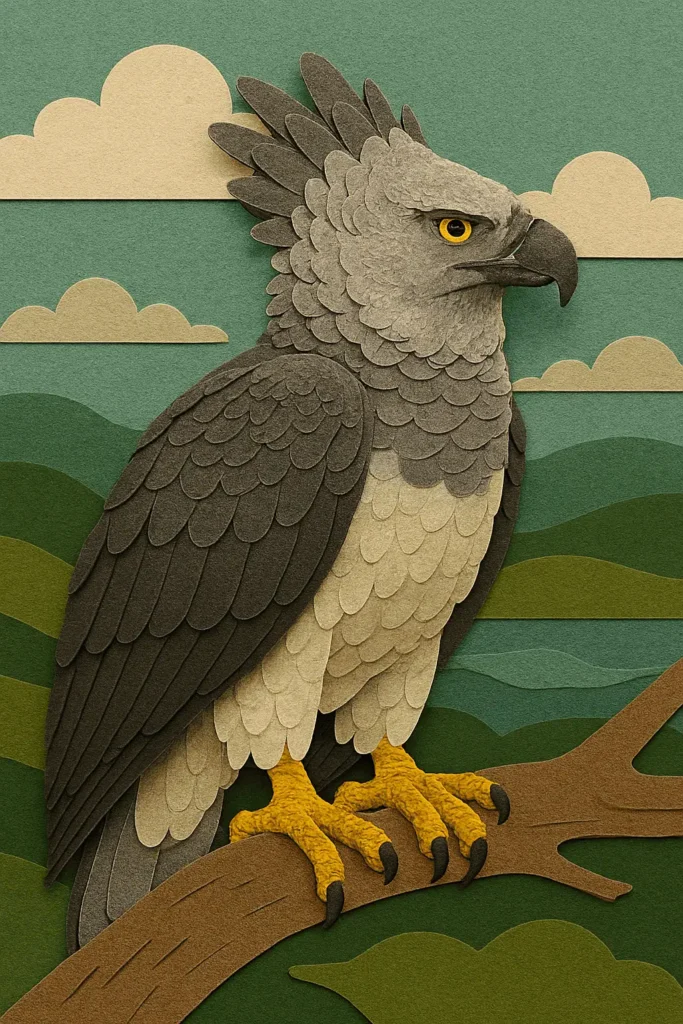
    Harpy Eagle (Harpia harpyja)

    Up to 9-10 kg (20-22 lb) in females. This rainforest giant from Central and South America has enormous talons for snatching sloths and monkeys.

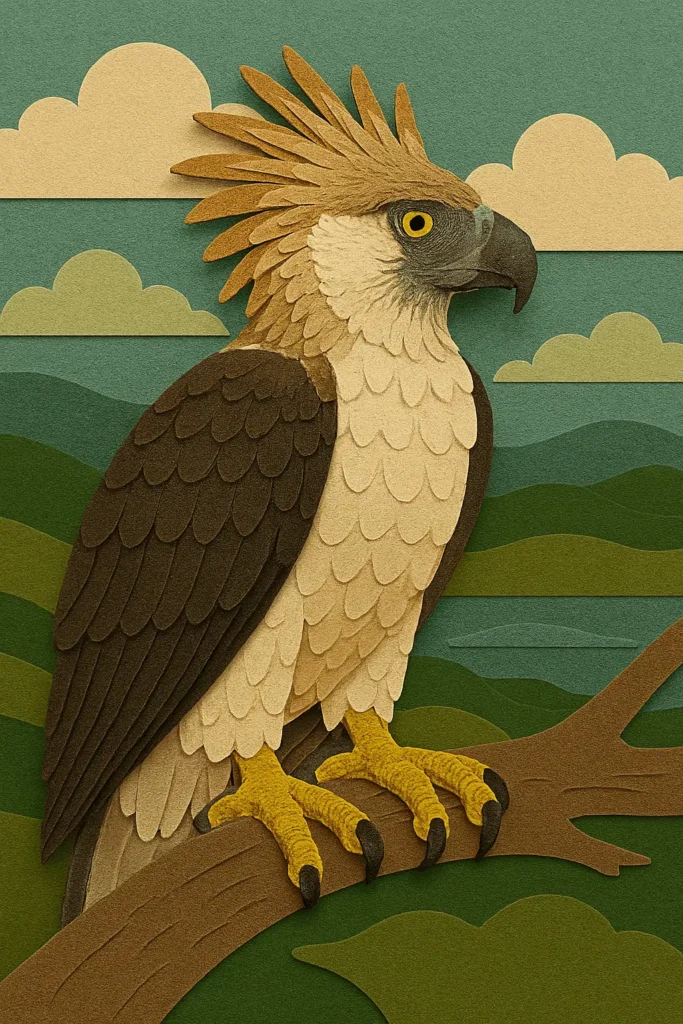
    Philippine Eagle (Pithecophaga jefferyi)

    Up to 8 kg (18 lb). Critically endangered and endemic to the Philippines, it boasts a shaggy crest and hunts monkeys and other arboreal prey.

    As symbols of freedom and strength across cultures, from ancient heraldry to modern emblems, these iconic birds of prey continue to soar as unrivaled masters of the sky.

    Yet with threats like deforestation and climate change looming, protecting these living legends is more crucial than ever.

    Which of these supreme hunters inspires you the most?

  • Strongest Animals in the World

    Not just muscle. Evolutionary power in its purest form.

    The word “strong” gets thrown around a lot. But in nature, strength isn’t just about muscle—it’s about survival, adaptation, and impact. Some animals lift mountains. Others move them, reshape ecosystems, or defy physics entirely.

    Here are the 3 strongest animals on Earth, each a master of its own domain.

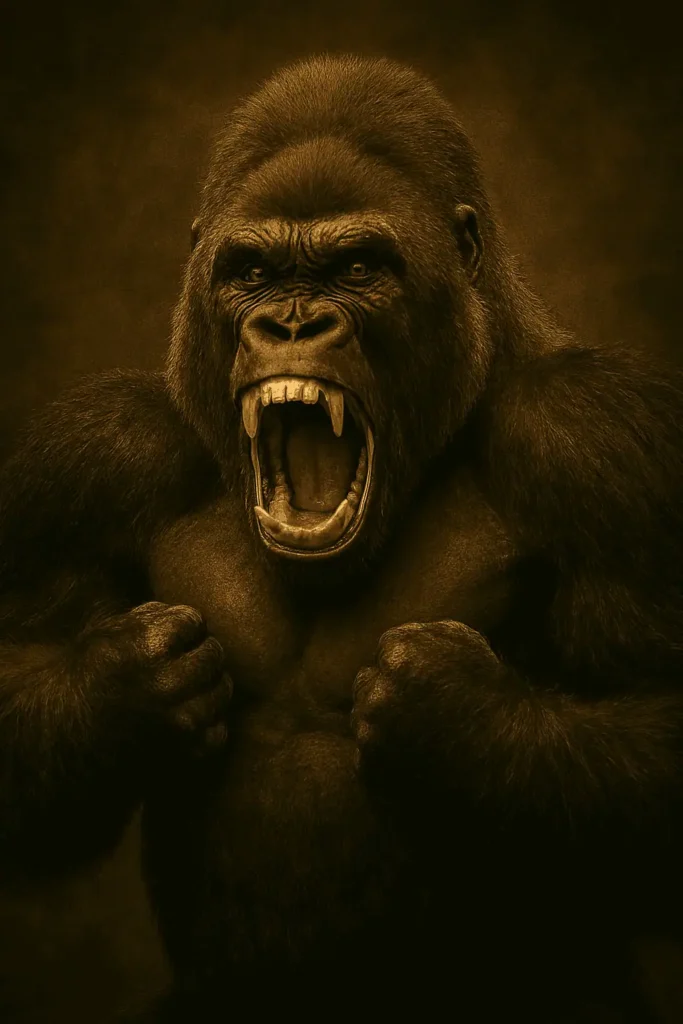
    Gorilla

    The heavyweight of the forest

    Raw strength: Can lift up to 1,800 pounds (815 kg).

    Gorillas don’t just look strong—they are. Their muscular build and sheer power make them the strongest primates alive.A peaceful giant whose strength is matched only by its vulnerability to habitat loss.

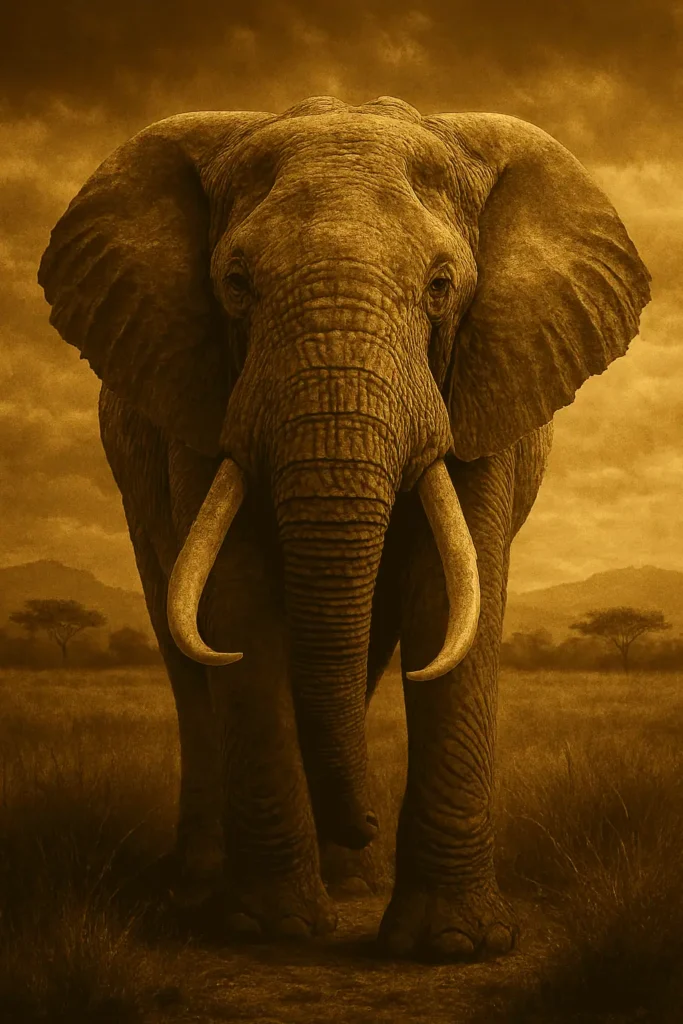
    African Bush Elephant

    Nature’s bulldozer

    Raw strength: Can carry over 9,000 kg and push trees like twigs.

    The largest land animal also happens to be one of the strongest.Their strength shapes entire ecosystems, but poaching and shrinking habitats threaten their legacy.

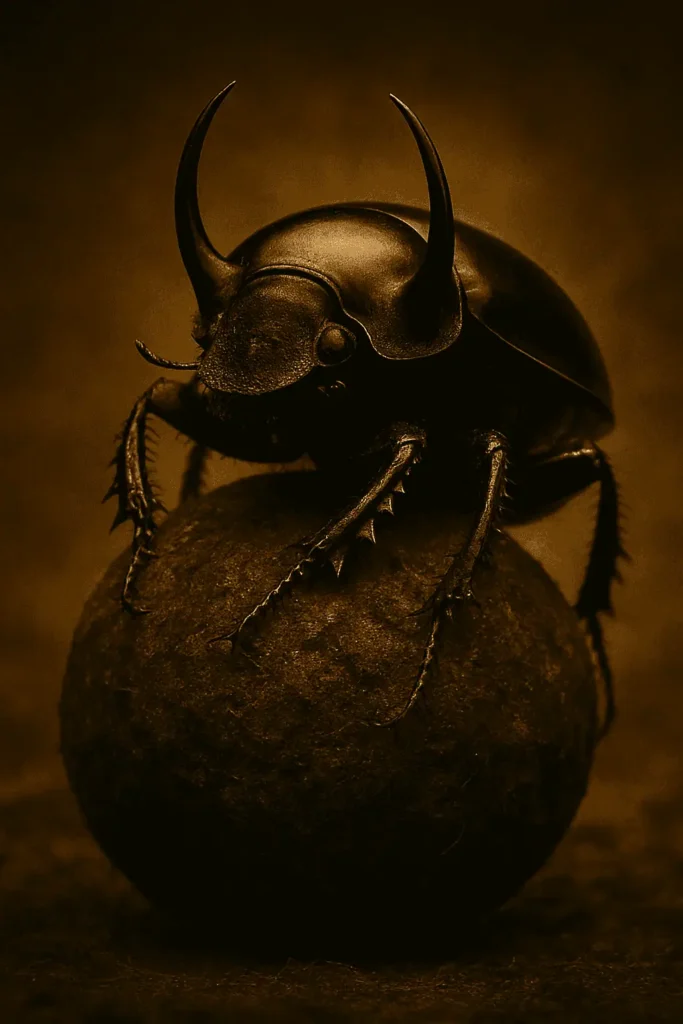
    Dung Beetle

    The pound-for-pound champion

    Proportional strength: Can pull over 1,000 times its own body weight.

    If humans had this strength ratio, we’d be dragging 18-wheelers uphill. Proof that size means nothing, evolution favors efficiency.

    True strength in nature comes in many forms.  

    Some animals dominate with brute force. Others with precision, endurance, or ecological influence.  

    Rare3arth exists to spotlight the ones that matter most, because understanding power means respecting its many shapes.

  • The Rarest Monkeys in the World

    Top 3 wonders from a vanishing branch of our family tree.

    Monkeys feel familiar: expressive faces, social lives, and a spark of intelligence that mirrors our own. But some of the world’s most extraordinary primates are also the most endangered, surviving in shrinking forests and fragile pockets of habitat.

    Here are the Top 3 rare monkeys worth knowing, remembering, and protecting.

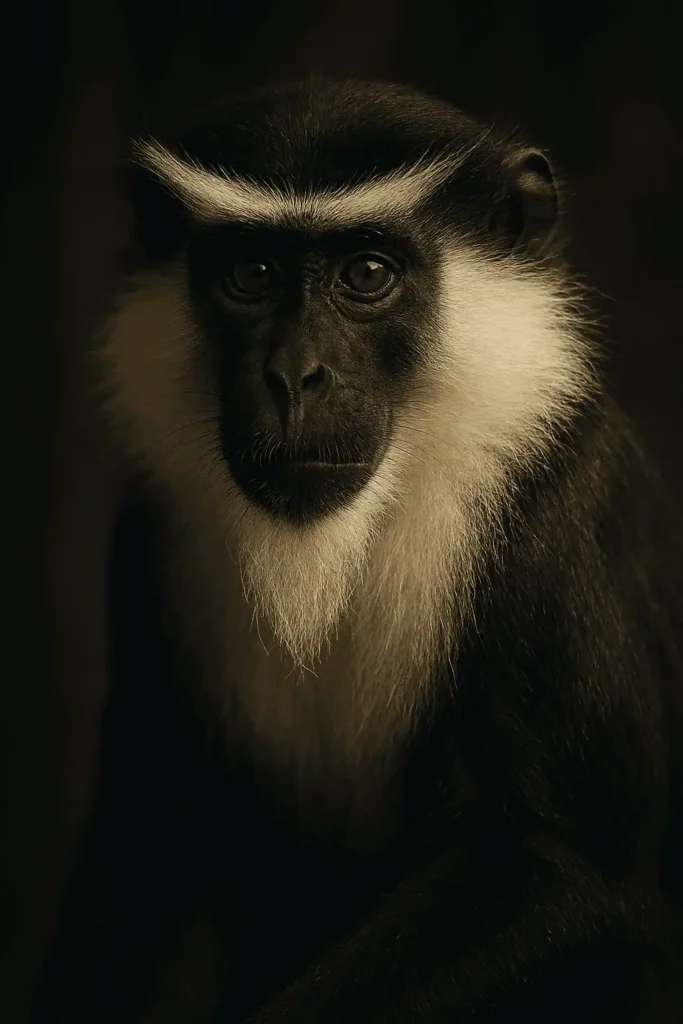
    Roloway Monkey

    West Africa’s disappearing ghost

    The Roloway Monkey is widely recognized as one of the rarest monkeys on Earth, surviving only in small forest fragments of Ghana and Côte d’Ivoire.

    • Why it’s rare: Habitat loss and hunting have pushed it to the brink.
    • What makes it unforgettable: A white beard framing a dark face, a chest stripe, and crimson patches on its lower back—like a primate wearing ceremonial robes.
    • Why it matters: Its disappearance would erase a lineage millions of years old.

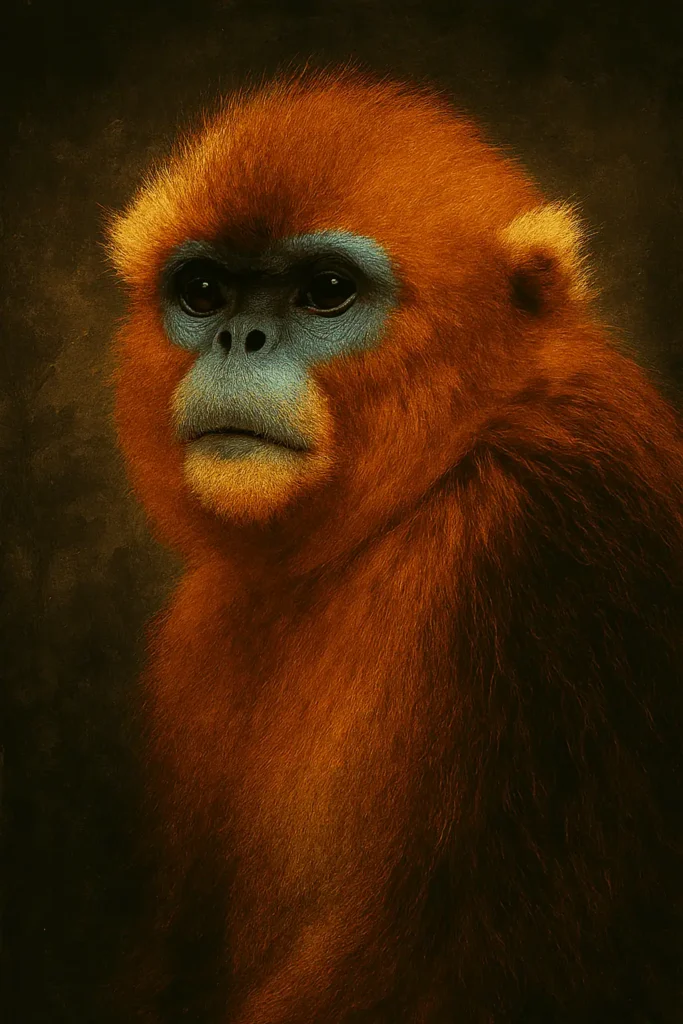
    Golden Snub‑Nosed Monkey

    China’s mountain treasure

    Once devastated by logging and hunting, the golden snub‑nosed monkey has slowly rebounded thanks to decades of conservation work in China’s mountain forests.

    • Why it’s rare: It lives only in high‑altitude forests where winter temperatures plunge below freezing.
    • What makes it unforgettable: Blue face, fiery orange fur, and a nose so small it looks sculpted.
    • Why it matters: Its survival shows what long‑term protection can achieve.

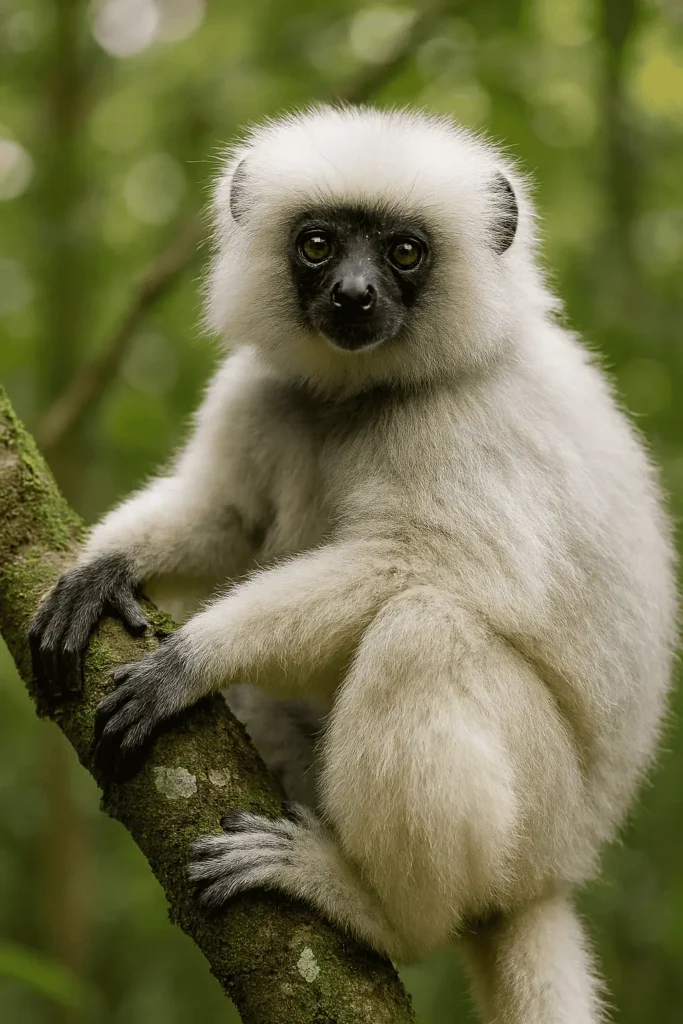
    Silky Sifaka

    Madagascar’s snow‑white phantom

    The silky sifaka has appeared on the list of the world’s most endangered primates since the list began in 2000.

    • Why it’s rare: Fewer than 1,000 remain in the wild.
    • What makes it unforgettable: Pure white fur, graceful leaps, and a presence that feels almost mythical.
    • Why it matters: Madagascar’s forests are collapsing—saving the sifaka means saving an entire ecosystem.

    Rare monkeys are living archives of evolution, behavior, and biodiversity. Lose them, and we lose stories millions of years in the making.

    Rare3arth exists to make sure those stories don’t disappear quietly.

  • Smallest Animals With the Weirdest Powers

    Tiny bodies. Impossible abilities. Nature’s strangest engineering happens at the smallest scale.

    Some animals don’t need size to be extraordinary. At microscopic and near‑microscopic levels, evolution gets weird, stripping bodies down, bending physics, and creating abilities that feel more like sci‑fi than biology. These are the smallest creatures with powers so strange, no zoo, lab, or enclosure could ever capture their full story.

    Tardigrade 

    The Creature That Refuses to Die

    The tardigrade, or “water bear,” is barely 0.5 mm long, but it’s the toughest animal on Earth. It can survive:

    • the vacuum of space
    • boiling water
    • freezing at −272°C
    • radiation that would shred human DNA
    • decades without food or water

    Its secret is cryptobiosis, a state where it curls into a dry, glass‑like capsule and shuts down almost every biological process. In this form, it’s basically a living USB drive: data stored, power off, waiting for the next reboot.

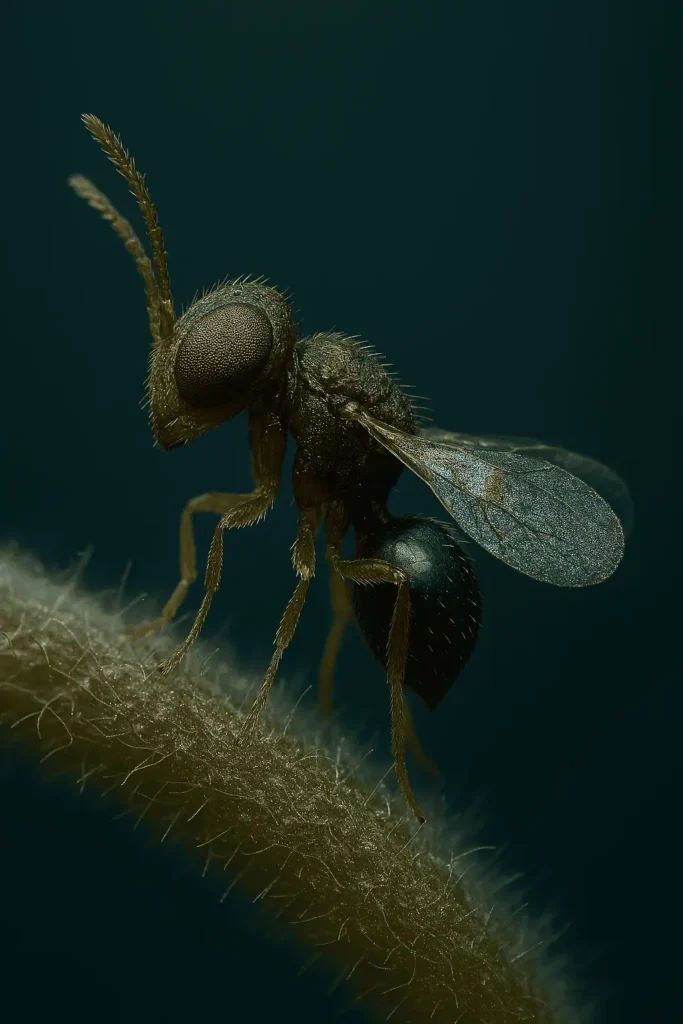
    Fairy Wasp

    The Insect With Neurons That Break Biology

    At 0.2 mm, the fairy wasp is smaller than many single‑celled organisms. To fit a functioning nervous system inside such a tiny body, evolution did something wild:  

    many of its neurons have no nuclei.

    This is biology stripped to the metal — a nervous system running on ultra‑compressed hardware. The wasp parasitizes the eggs of other insects, performing microscopic precision work on surfaces you’d need a microscope to even recognize.

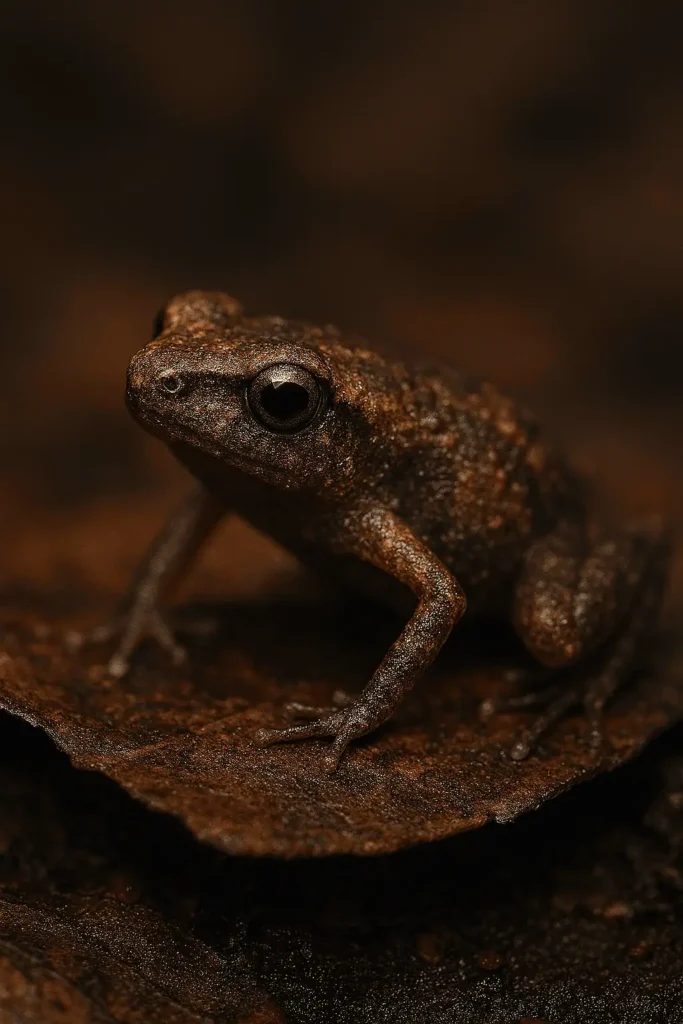
    Paedophryne amauensis

    The Frog That Sounds Like an Insect

    The world’s smallest vertebrate, at 7.7 mm, doesn’t hop like a frog. It pings like a cricket. Its call is so high‑pitched that researchers found it by accident, thinking they were tracking an insect.

    Its power is acoustic invisibility, blending into the soundscape so perfectly that predators (and humans) can’t distinguish it from background noise. It’s a vertebrate hiding inside an insect’s frequency range.

    Why the Weirdest Powers Belong to the Smallest Creatures

    At tiny scales, physics changes. Water feels thick. Air feels heavy. Surfaces become landscapes. Evolution starts bending rules: shrinking organs, rewriting neural architecture, and inventing survival strategies that don’t exist at larger sizes.

    These animals aren’t just small. They’re impossible in ways only nature could engineer.

  • Smallest Animals You’ll Never See in a Zoo

    Too tiny. Too hidden. Too impossible to display.

    Zoos are built for creatures you can see, hear, and interact with. But some animals are so small, so specialized, or so remote that no enclosure could ever hold them. These are the micro-marvels, living proof that nature’s most extreme designs aren’t always big.

    Paedophryne amauensis

    The World’s Smallest Vertebrate

    Discovered in Papua New Guinea, this frog is just 7.7 mm long, smaller than a grain of rice. It lives in leaf litter, camouflaged so perfectly that researchers only found it by tracking its high-pitched chirps.

    No zoo has ever displayed it. It’s too small to spot, too fragile to transport, and too dependent on its microhabitat to survive in captivity.

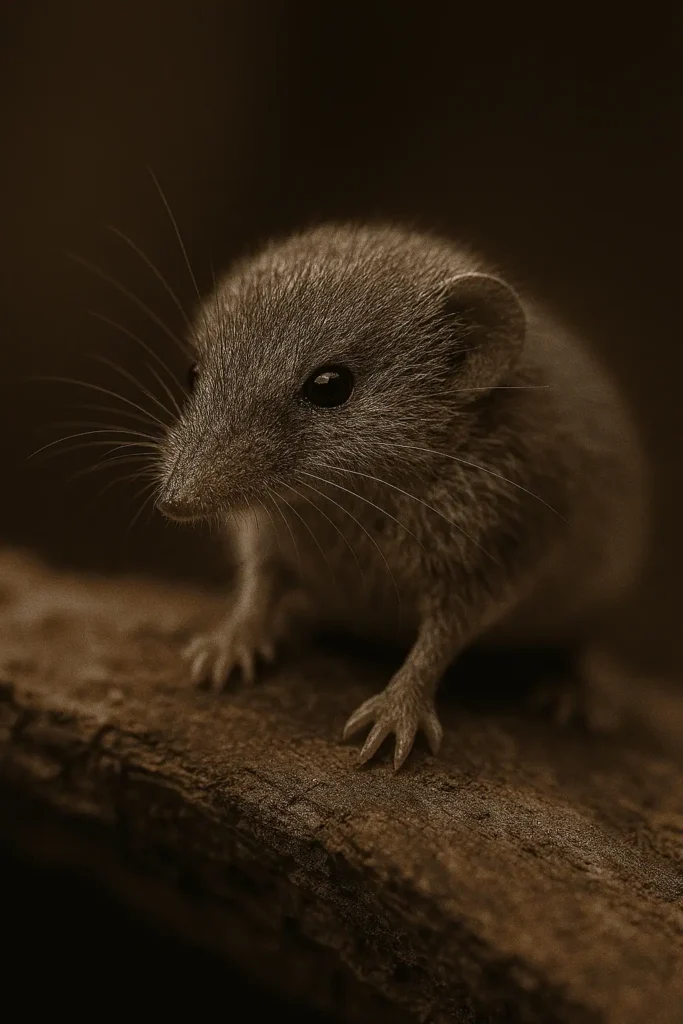
    Etruscan Shrew

    The Smallest Mammal by Mass

    Weighing just 1.8 grams, the Etruscan shrew has a heart rate of up to 1,500 beats per minute and must eat constantly to survive. It’s a blur of motion, with metabolism so fast it borders on combustion.

    Zoos don’t house it because it’s nearly impossible to feed, monitor, or contain without causing stress. It’s a mammal that lives on the edge of physics.

    Fairy Wasp (Megaphragma mymaripenne)

    Smaller Than a Paramecium

    This insect is just 0.2 mm long, smaller than many single-celled organisms. It parasitizes the eggs of other insects and has neurons so tiny they lack nuclei. You can’t see it with the naked eye, and even under a microscope, it looks like a drifting speck.

    No zoo could ever display it — it’s a creature of the microscopic world, not the visible one.

    Why These Creatures Stay Invisible

    Some animals are designed for invisibility. Their survival depends on staying hidden, moving fast, or living in environments humans can’t replicate. They remind us that nature’s extremes aren’t always loud or large sometimes, they’re quiet, fleeting, and impossible to hold.