Wonders

Reveals the rare, unusual, & hard‑to‑believe natural phenomena that most people never get to see. From strange landscapes to extreme environments, this category uncovers the planet’s most remarkable secrets.

  • Places on Earth That Feel Alien

    Some landscapes look like they belong on another planet. No cities, no familiar shapes, just raw geology and colors that don’t make sense. These three places feel so strange and otherworldly that stepping into them is like leaving Earth behind.

    Danakil Depression, Ethiopia — Earth’s Hottest, Strangest Landscape

    The Danakil Depression looks like a sci‑fi set built for a planet with no atmosphere.  

    Pools glow neon green. Crystals form in impossible shapes. Steam vents hiss from the ground.

    Temperatures can reach 50°C (122°F), and the air smells like sulfur.

    What makes it alien:

    • Acid pools in bright yellow and green
    • Salt flats stretching to the horizon
    • Active volcanoes and lava lakes
    • A landscape that looks chemically wrong

    It’s one of the few places where Earth feels unfinished.
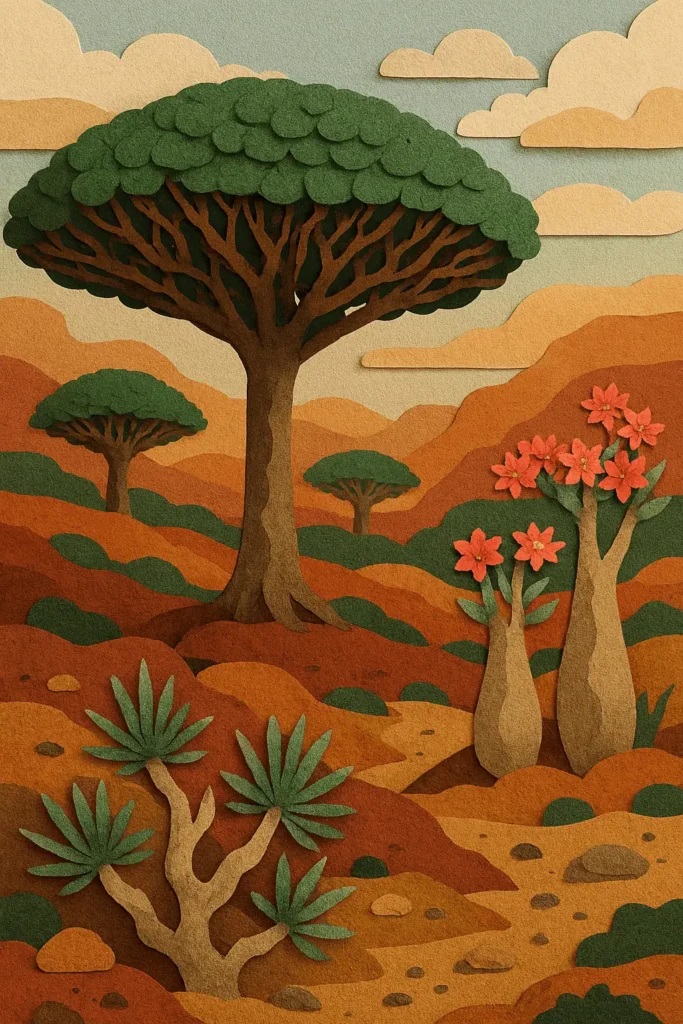
    Socotra Island, Yemen — The Island of Impossible Trees

    Socotra is often called the most alien‑looking place on Earth and it earns the title.

    The island is home to plants found nowhere else, including the dragon’s blood tree, which looks like a giant umbrella made of wood. The sap is bright red, and the forests look like they belong on another world.

    What makes it alien:

    • Dragon’s blood trees with umbrella canopies
    • Bottle trees shaped like swollen trunks
    • Wildlife that evolved in isolation
    • A landscape that feels untouched for millions of years

    Socotra is Earth’s closest match to a natural alien ecosystem.
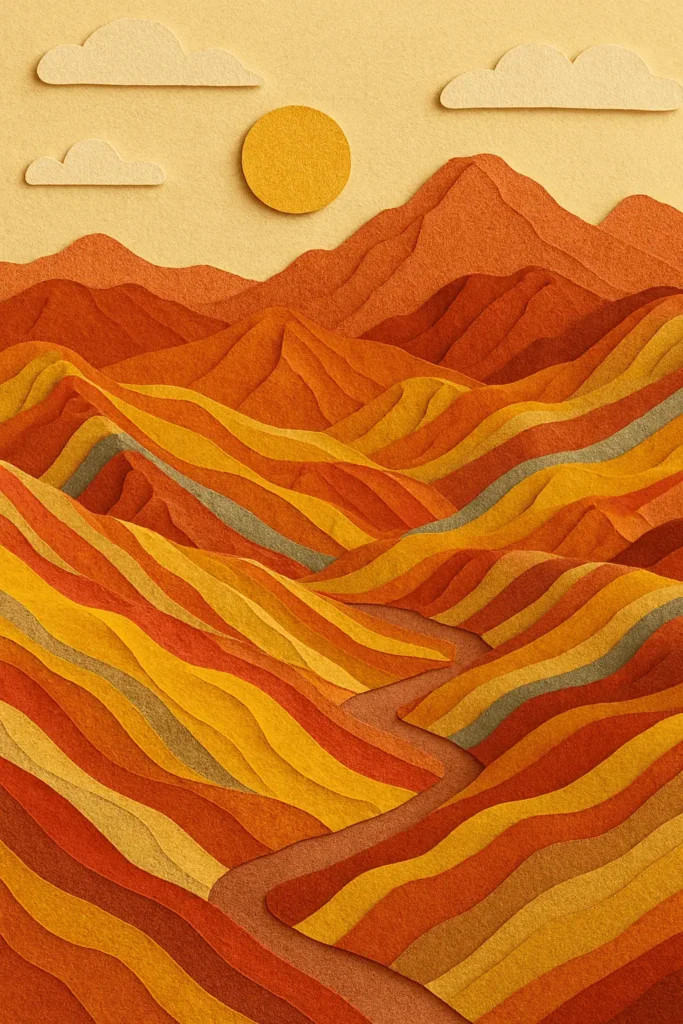
    Zhangye Danxia, China — The Rainbow Mountains

    These mountains look digitally edited, but the colors are real. Layers of sandstone and minerals were compressed, lifted, and carved by wind into waves of red, gold, blue, and purple.

    From a distance, the hills look painted.

    What makes it alien:

    • Stripes of color that look artificial
    • Smooth, rolling shapes with no vegetation
    • A horizon that glows at sunrise and sunset

    It’s one of the few places where geology looks like art.

    These landscapes feel alien because they break the rules of what Earth “should” look like:

    • Danakil is too hot, too bright, too chemical
    • Socotra is too strange, too isolated, too ancient
    • Danxia is too colorful, too smooth, too perfect

    Earth still has places that feel like other worlds, no spaceship required.

  • Unsolved Mysteries That Still Haunt Us in 2026

    Ever lie awake at night wondering about those creepy real-life puzzles that no one’s ever cracked? Yeah, me too. From vanished planes to ancient books that look like they’re written in alien scribble, some mysteries just refuse to go away.

    As we kick off 2026, here are my picks for the top 3 unsolved mysteries of all time: the ones that keep historians, detectives, and conspiracy theorists up at night. These aren’t just old stories; they’re mind-benders that still spark debates today.

    The Voynich Manuscript: The World’s Most Mysterious Book

    Picture this: a 600-year-old book filled with weird plants that don’t exist, naked figures in baths, and a script no one can read. Discovered in 1912 by rare book dealer Wilfred Voynich, this handwritten codex has baffled cryptographers, linguists, and even AI experts for over a century.Is it a lost language? A hoax? Herbal medicine guide from another dimension?

    Top codebreakers from WWII and modern pros have tried and failed to decode it. Yale University keeps it locked away, and theories range from alien authorship to a clever medieval prank. Whatever it is, it’s the ultimate uncrackable puzzle.

    Jack the Ripper: London’s Victorian Nightmare

    Autumn 1888, Whitechapel district foggy streets, gas lamps flickering, and a serial killer slicing through the night. At least five women brutally murdered, their bodies mutilated in ways that shocked even hardened cops.

    The killer taunted police with letters signed “Jack the Ripper,” but he vanished without a trace.Over 100 suspects (from royalty to immigrants), DNA attempts on old evidence, endless books and movies yet his identity remains unknown.

    Was it one person or a copycat spree? This case basically invented the modern serial killer myth, and it’s still the gold standard for unsolved murders.

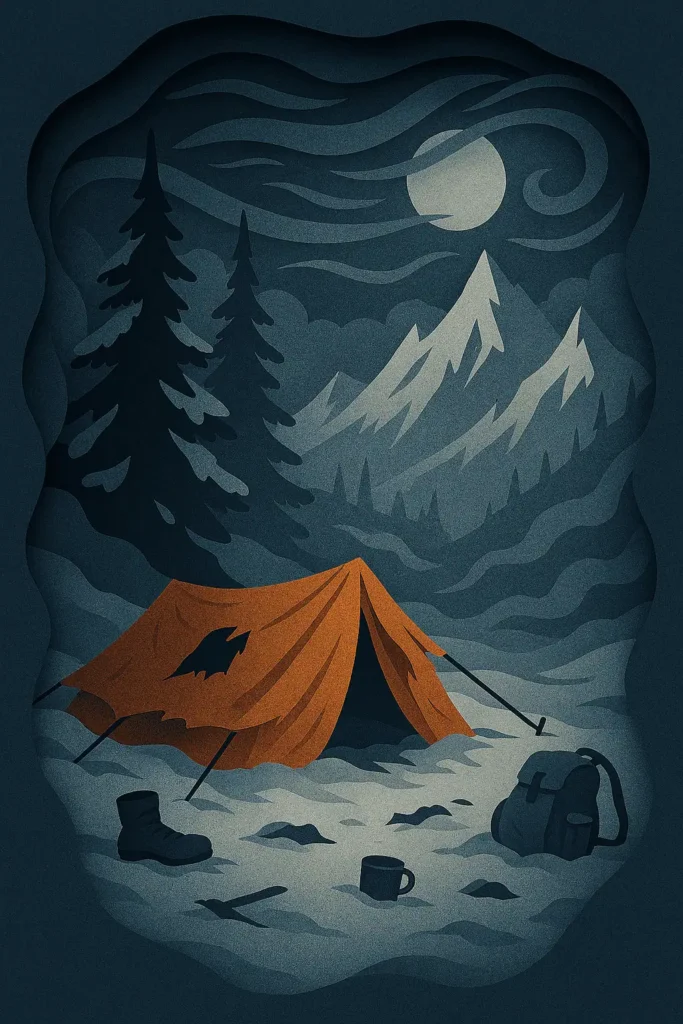
    The Dyatlov Pass Incident: Nine Hikers’ Frozen Terror

    February 1959, remote Ural Mountains in Russia. Nine experienced hikers flee their tent in the dead of night cutting it open from inside, barefoot in sub-zero temps.

    They die mysteriously: some from hypothermia, others with crushed skulls and missing eyes, but no footprints from attackers.

    Soviet investigations blamed an “unknown compelling force.” Theories? Avalanche, military tests, Yeti attack, infrasound panic?

    Recent studies point to a rare slab avalanche, but weird details like radioactive clothing and orange skin keep the conspiracy fires burning. It’s one of the creepiest outdoor mysteries ever.

    Honorable mentions go to the Bermuda Triangle’s endless disappearances, D.B. Cooper’s sky-high heist, and the Zodiac Killer’s taunting ciphers.

    What do you think? will we ever solve these? Drop your theories in the comments. If you’re into this stuff, share it around; who knows, maybe 2026 is the year one finally cracks!

  • The Smartest Humans Alive

    Highest Recorded IQs Ever Measured

    Some people reshape the world through talent, discipline, or luck. Others do it with raw cognitive firepower so rare that it bends the curve of what humans can understand.  

    This is the Top 3: the highest recorded IQs ever measured, verified through high‑range testing and recognized across 2025’s most credible rankings.  

    Not estimates. Not legends. Documented extremes of human intelligence.

    YoungHoon Kim — IQ 276

    The highest recorded IQ in human history.  

    YoungHoon Kim’s score isn’t a rumor or a myth, it’s a formally recognized result from high‑range intelligence testing, placing him in a cognitive range that borders on the theoretical.  

    His performance represents the outer edge of what the human brain has ever demonstrated, a level of pattern recognition and reasoning speed that defies comparison.

    Terence Tao — IQ 230

    A mathematician whose mind feels like a natural force.  

    Terence Tao, a Fields Medalist and UCLA professor, is widely regarded as the greatest living mathematician. His IQ score is only one part of the story, his real legacy is the way he solves problems that other mathematicians can’t even phrase.

    Tao’s work shapes the foundations of modern mathematics, from harmonic analysis to number theory.

    Marilyn vos Savant — IQ 228

    The long‑standing icon of high intelligence.  

    Marilyn vos Savant held the Guinness World Record for highest IQ and became famous for her ability to explain complex logic with disarming clarity. Her published reasoning on the Monty Hall problem remains one of the most influential logic explanations ever written.

    She proved that extreme intelligence can be public, accessible, and useful turning raw cognitive ability into cultural impact.

    Many people are brilliant.  

    Only a handful have verified scores that push into the rarest fractions of a percent.  

    These three represent the documented peak of human cognitive performance, each in a different way, each reshaping what we think a mind can do.

  • Smallest Animals With the Weirdest Powers

    Tiny bodies. Impossible abilities. Nature’s strangest engineering happens at the smallest scale.

    Some animals don’t need size to be extraordinary. At microscopic and near‑microscopic levels, evolution gets weird, stripping bodies down, bending physics, and creating abilities that feel more like sci‑fi than biology. These are the smallest creatures with powers so strange, no zoo, lab, or enclosure could ever capture their full story.

    Tardigrade 

    The Creature That Refuses to Die

    The tardigrade, or “water bear,” is barely 0.5 mm long, but it’s the toughest animal on Earth. It can survive:

    • the vacuum of space
    • boiling water
    • freezing at −272°C
    • radiation that would shred human DNA
    • decades without food or water

    Its secret is cryptobiosis, a state where it curls into a dry, glass‑like capsule and shuts down almost every biological process. In this form, it’s basically a living USB drive: data stored, power off, waiting for the next reboot.

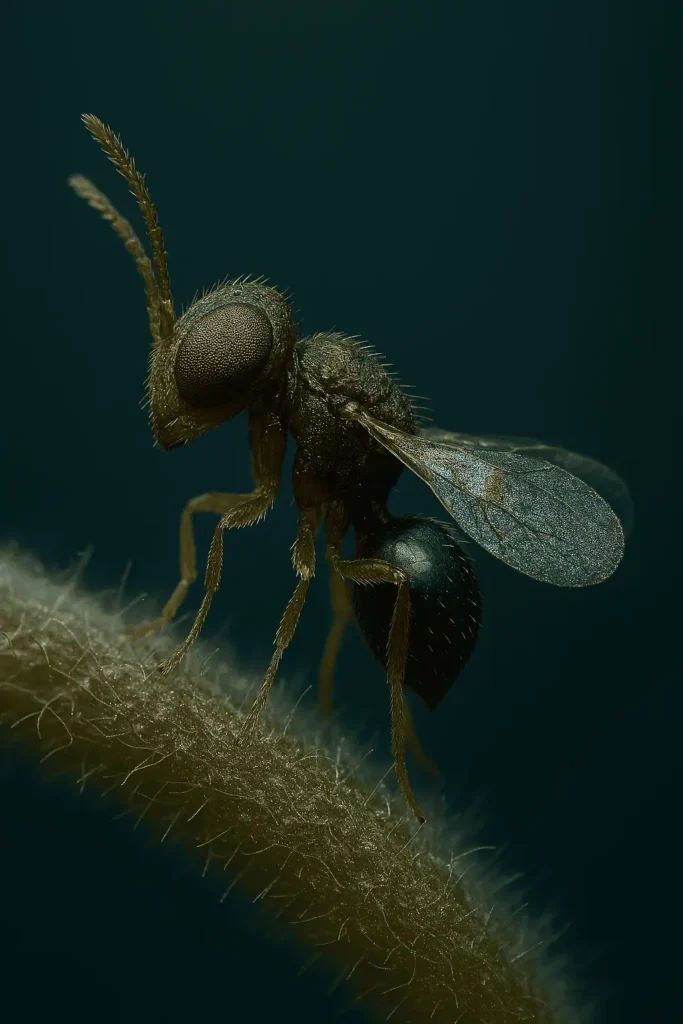
    Fairy Wasp

    The Insect With Neurons That Break Biology

    At 0.2 mm, the fairy wasp is smaller than many single‑celled organisms. To fit a functioning nervous system inside such a tiny body, evolution did something wild:  

    many of its neurons have no nuclei.

    This is biology stripped to the metal — a nervous system running on ultra‑compressed hardware. The wasp parasitizes the eggs of other insects, performing microscopic precision work on surfaces you’d need a microscope to even recognize.

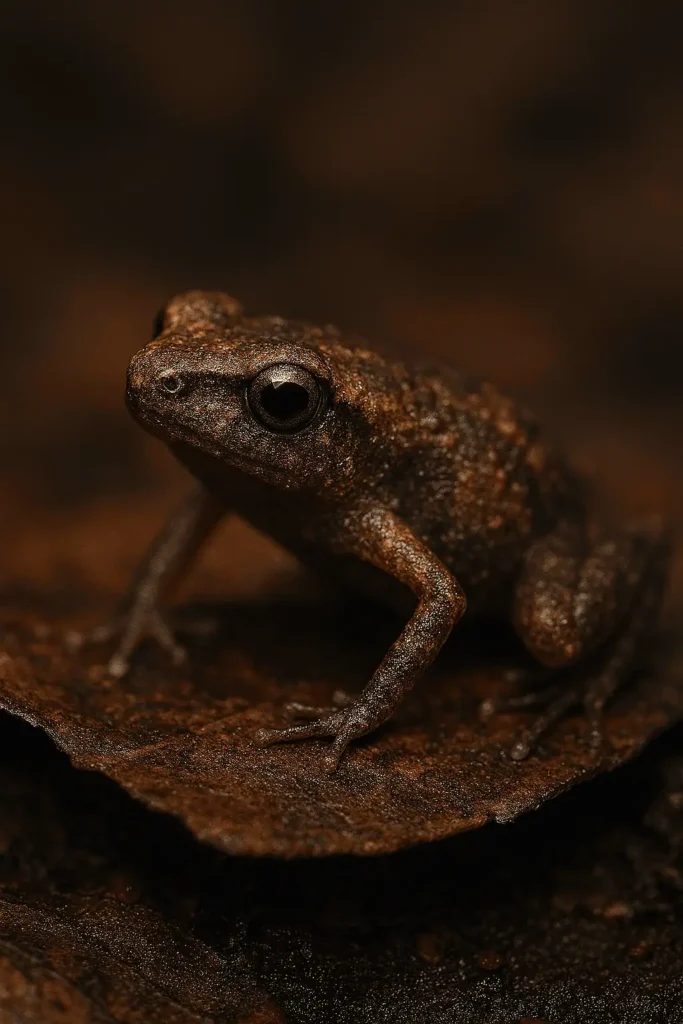
    Paedophryne amauensis

    The Frog That Sounds Like an Insect

    The world’s smallest vertebrate, at 7.7 mm, doesn’t hop like a frog. It pings like a cricket. Its call is so high‑pitched that researchers found it by accident, thinking they were tracking an insect.

    Its power is acoustic invisibility, blending into the soundscape so perfectly that predators (and humans) can’t distinguish it from background noise. It’s a vertebrate hiding inside an insect’s frequency range.

    Why the Weirdest Powers Belong to the Smallest Creatures

    At tiny scales, physics changes. Water feels thick. Air feels heavy. Surfaces become landscapes. Evolution starts bending rules: shrinking organs, rewriting neural architecture, and inventing survival strategies that don’t exist at larger sizes.

    These animals aren’t just small. They’re impossible in ways only nature could engineer.

  • Why Earth Is Unique Among Planets

    Earth is the only known planet with life

    Life requires a razor‑thin combination of temperature, atmosphere, chemistry, and liquid water. Earth is the only world confirmed to host life in the universe so far.

    • Stable climate
    • Protective atmosphere
    • Rich ecosystem

    Together, they form the crown jewel of Earth’s uniqueness.

    Earth doesn’t just have life, it has layers of life:

    • Millions of species: from microbes to whales
    • Interconnected food webs: predators, prey, decomposers
    • Biomes: rainforests, deserts, oceans, tundra — each with unique life strategies
    • Adaptation and evolution: life that changes, competes, and thrives

    No other planet we know has this depth, diversity, and dynamism. Mars might have microbes. Europa might have ocean life. But Earth has entire ecosystems: complex, self-sustaining, and wildly varied.

    Earth has abundant liquid water on its surface

    Earth is the only planet in our solar system with vast oceans of liquid water, covering over 70% of the surface, an essential ingredient for life and a major factor in climate stability.

    Earth’s atmosphere is perfectly balanced for life

    Our atmosphere is a rare mix:

    • 21% oxygen (enough for complex life, not enough to ignite the planet)
    • A protective ozone layer
    • A greenhouse effect that warms without overheating


    This combination is unlike any other planet in the solar system and is central to Earth’s habitability.

  • Deepest Ocean Trenches

    The top three deepest ocean trenches, based on maximum verified depths from scientific surveys and expeditions, are all located in the western Pacific Ocean and formed by subduction zones where tectonic plates converge.

    Mariana Trench (Challenger Deep)

    Located east of the Mariana Islands, this is the deepest known point on Earth. The maximum depth is approximately 10,984 meters (36,037 feet), with some measurements ranging from 10,920 to 11,034 meters depending on the method and year. It’s deeper than Mount Everest is tall.

    Tonga Trench (Horizon Deep)

    Located in the South Pacific near Tonga and the Kermadec Islands, this is the deepest point in the Southern Hemisphere. The verified depth at Horizon Deep is 10,823 meters (35,509 feet), confirmed by a manned submersible descent in 2019.

    Philippine Trench (Galathea Depth)

    Located east of the Philippines in the Philippine Sea, its maximum depth is 10,540 meters (34,580 feet). This makes it the third deepest, though some older sources vary slightly in exact figures.

    These trenches host extreme environments with immense pressure, near-freezing temperatures, and unique hadal zone ecosystems adapted to the dark depths.

    Quick Comparison Table

    RankTrenchDeepest PointApprox. DepthRegion
    1.Mariana TrenchChallenger Deep~10,984 m
    Western Pacific
    2.Tonga TrenchHorizon Deep~10,800 m
    South Pacific
    3.Philippine TrenchGalathea Depth~10,540 m
    Western Pacific