
Technology

Explores the tools, systems, and innovations shaping how we live, work, and create. From breakthroughs in AI to everyday digital devices, this category covers the ideas and inventions driving the modern world forward.

  • Greatest Founders of All Time

    In January 2026, as Elon Musk’s empire continues to redefine humanity’s trajectory, the debate over the greatest founders rages on X and beyond.

    A recent viral thread sparked fresh arguments: modern titans like Musk, Jobs, Jensen Huang, and Bezos dominate many lists, but when we zoom out to all time, the verdict sharpens.

    Impact, scale, innovation, and lasting legacy demand we crown these three legends.

    Here they are, the undisputed top 3, ranked by their world-altering contributions.

    Elon Musk — The Architect of the Future

    No one in history has juggled multiple civilization-scale moonshots simultaneously and actually delivered. Musk didn’t just build companies; he forced entire industries to evolve or die.From co-founding PayPal (revolutionizing digital finance) to Tesla (mainstreaming electric vehicles and sustainable energy), SpaceX (reusable rockets, Starlink global internet, and the real path to multi-planetary life), Neuralink (brain-machine interfaces), and xAI (pushing the frontier of artificial intelligence), his footprint is planetary… and interplanetary.

    In 2026, with Tesla’s valuation soaring, SpaceX landing Starships routinely, and his net worth eclipsing historical benchmarks (even adjusted for GDP share), Musk has surpassed even John D. Rockefeller’s peak economic dominance in relative terms.

    He’s not just playing the game; he’s rewriting the rules of what’s possible for our species.
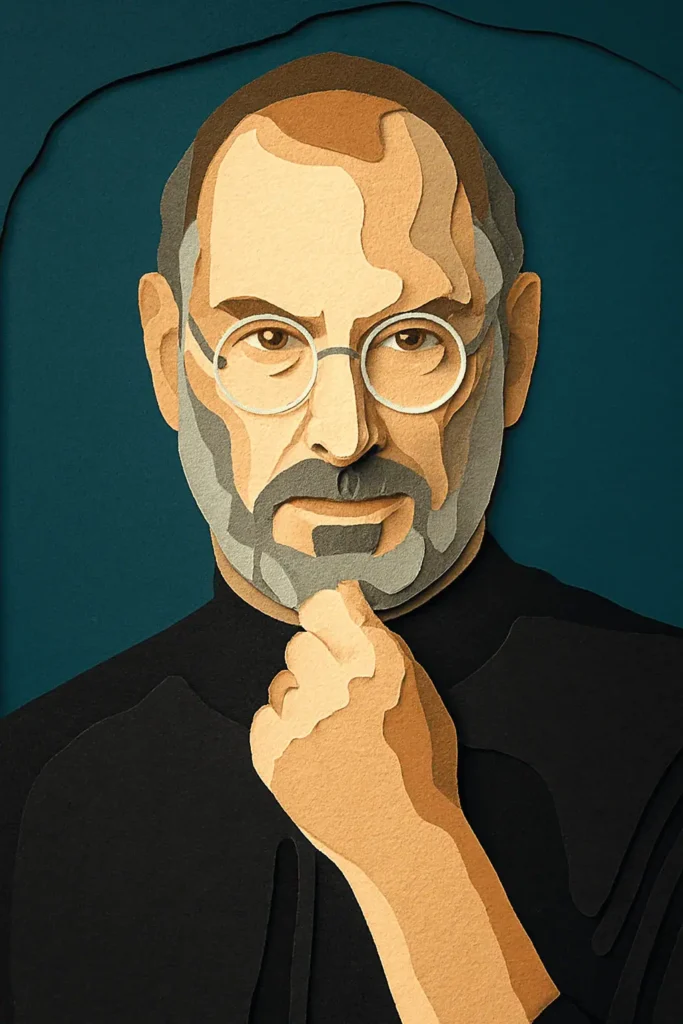
    Steve Jobs — The Master of Human-Centered Revolution

    Before “user experience” was a buzzword, Steve Jobs made it the only thing that mattered.

    Co-founding Apple, he turned clunky computers into objects of desire, then reinvented music (iPod + iTunes), phones (the iPhone), and tablets (iPad), while Pixar redefined animation and storytelling.

    Jobs didn’t invent the technologies, he obsessed over design, simplicity, and emotional connection, creating entirely new markets and cultural phenomena.

    The smartphone in your pocket? That’s his fingerprint. The way billions interact with technology daily? His legacy.

    Even a decade after his passing, Apple’s trillion-dollar empire and cultural dominance prove his vision was timeless. The iconic black turtleneck moments still give chills:

    John D. Rockefeller — The Blueprint for Modern Capitalism

    Before tech billionaires, there was the original titan. Founding Standard Oil in 1870, Rockefeller didn’t just dominate oil, he invented the modern corporation through ruthless vertical integration, efficiency, and scale.

    He controlled refining, distribution, and pricing, powering the Industrial Revolution and making kerosene (then gasoline) affordable for the masses.

    Adjusted for inflation and economic share, his wealth dwarfed most modern fortunes for decades.

    Yet his real legacy? Pioneering large-scale philanthropy: the Rockefeller Foundation shaped medicine, education, and public health worldwide.

    He built the template every empire-builder since has followed (for better or worse):

    Why These Three Rise Above the Rest

    • Musk expands humanity’s frontier (space, AI, energy).
    • Jobs reshaped how humans experience technology.
    • Rockefeller created the industrial-age playbook and gave back at unprecedented scale.

    Honorable mentions? Jeff Bezos (Amazon’s e-commerce empire), Jensen Huang (NVIDIA’s AI dominance), Henry Ford (mass production), Andrew Carnegie (steel), and more.

    But for sheer, civilization-shifting impact across eras? These three stand alone.

    Who’s your #1 in 2026? Drop it below. The debate never dies.

  • The Skill That’ll Outlast AI and Everything Else

    Keys to High Agency

    Agency, in super simple terms, is your power to make choices and take action on your own. It’s like being the boss of your life deciding what to do, when to do it, and not just waiting for others to tell you or give permission.

    High agency means you’re really good at this, pushing through obstacles to get what you want.

    High agency is basically the boss-level skill you need right now, especially with AI flipping the world upside down. It’s not about being a genius or having fancy tools, it’s about owning your path.

    I stripped it down to my top 3 takeaways, keeping it straightforward and real. No fluff, just stuff that hits home if you’re tired of feeling stuck.

    Iterate Without Permission – That’s Real Freedom

    Look, most people wait for the green light from a boss, society, or even their own doubts before making a move. But high agency? It’s all about jumping in, trying stuff, screwing up, and tweaking it on the fly, no one’s approval needed.

    Think about it: life’s too short to conform to everyone else’s rules. If you’re tied to a job or beliefs that aren’t yours, you’re low-agency by default.

    Break that cycle by treating every decision like a revolt against the ordinary. Start small, like testing a new habit without overthinking it, and watch how it builds momentum.

    This is how you stop surviving and start thriving, no matter what curveballs come.

    Turn Your Life Into One Big Experiment

    Forget the “employee mindset” where you just follow orders and hope for the best.

    High-agency folks see life as a lab—they set their own goals, make educated guesses, test ’em out, and learn from the flops.

    Failure isn’t a dead end; it’s data. Remember those experiments where dogs gave up escaping shocks because they learned helplessness?

    That’s what society does to us, making tough goals feel impossible.

    But if you shift your thinking, difficult stuff becomes doable. Pick a goal that’s a stretch, break it into tests, and iterate.

    You’ll be amazed how “impossible” turns into “I got this” when you stop whining and start experimenting.

    AI Can’t Touch You If You’ve Got Vision

    Everyone’s freaking out about AI taking over jobs and creativity, but here’s the truth: AI’s just a tool, and tools need a master.

    If you’re high agency, you use it to amp up your game—summarize experts, refine ideas, execute faster without letting it call the shots.

    Low-agency types ask AI to do everything and end up with generic crap, no personality or purpose. But if you’ve got a clear vision, AI helps you build something real, like a brand or project with heart.

    It’s not about equal access anymore; it’s about who acts on it. High-agency people outpace the crowd because they direct the tech, not the other way around.

    Bottom line: master your mind, and AI becomes your sidekick, not your replacement.

    That’s it! Three solid nuggets that could change how you roll. I’ve been chewing on this, and it’s pushed me to tweak a few things in my own routine.

    Give it a shot; life’s better when you’re in the driver’s seat. What do you think? Got any high-agency stories?

  • Key Figures Behind the Invention of the Web

    The World Wide Web (WWW) was invented at CERN in 1989–1991 as a revolutionary system for sharing and linking information over the Internet.

    While Sir Tim Berners-Lee receives primary credit, a small team contributed crucially to its early development.

    Here are the top 3 key figures behind its invention, based on official CERN accounts and historical records:

    Sir Tim Berners-Lee

    British computer scientist who proposed the Web in 1989 and single-handedly developed its core components: HTML (HyperText Markup Language), HTTP (HyperText Transfer Protocol), and URLs (Uniform Resource Locators).

    He also created the first web browser/editor and server on a NeXT computer, making him the foundational inventor.

    Robert Cailliau

    Belgian systems engineer who partnered closely with Berners-Lee. He co-authored the formal 1990 project proposal, helped secure funding, promoted the idea within CERN, and contributed to early presentations and organization, including the first World Wide Web conference.

    Nicola Pellow

    British computer scientist (as a student intern at CERN) who developed the Line Mode Browser, the first cross-platform web browser that ran on various computers beyond Berners-Lee’s NeXT system. This made the early Web more accessible and usable for a wider audience.

    These three worked together at CERN during the Web’s birth, as captured in this early team photo:

  • Top AI Models for Raw Coding Performance

    As of early 2026, there is no single “best” AI for coding. It depends on your needs, such as inline suggestions, complex reasoning, full-project autonomy, or IDE integration.

    Based on recent developer reviews, benchmarks, and comparisons, here are the top contenders:

    GPT-5 (OpenAI)

    Leads or ties for top spot in many metrics (e.g., 94% on HumanEval, 81% on SWE-Bench Verified). Strong in versatile code generation and agentic tasks.

    Claude (Anthropic, e.g., Sonnet/Opus 4.5 variants)

    Excels in depth, reasoning, debugging large codebases, and low hallucinations. Often matches or edges GPT-5 in code quality and reliability.

    Gemini 2.5 Pro (Google)

    Solves complex, multi-step problems with high accuracy. Strong at building apps, editing code, and handling large repos.
    Understands text, images, audio, and long videos.