History

Highlights the breakthroughs, inventions, discoveries, and turning points that shaped human progress. It looks at how people solved problems, built civilizations, and changed the world through creativity and determination.

  • Smartest Humans in History and Today

    The Minds That Bent Reality

    Every era produces a few rare humans who don’t just solve problems, they rewrite the rules of existence.

    These are the thinkers who saw patterns the rest of us missed, challenged the limits of their time, and left ideas powerful enough to shape entire centuries.

    From physics to chemistry to modern mathematics, their breakthroughs didn’t just advance knowledge, they changed what humanity believed was possible.

    This Top 3 list isn’t about IQ scores or trivia. It’s about impact, imagination, and the kind of intelligence that moves civilization forward.

    Albert Einstein

    The Mind That Rewrote Reality

    Einstein didn’t just solve equations, he changed the rules of the universe. His theories of relativity reshaped physics, powered modern technology like GPS, and opened the door to understanding space, time, and energy at a deeper level.

    His genius wasn’t just IQ; it was the ability to imagine what no one else could see.

    Marie Curie

    The Scientist Who Opened the Invisible World

    Curie discovered radium and polonium, pioneered radioactivity, and became the first person to win two Nobel Prizes. Her work transformed medicine, physics, and chemistry.

    She stands as a rare example of intelligence fused with courage pushing into the unknown despite enormous personal risk.
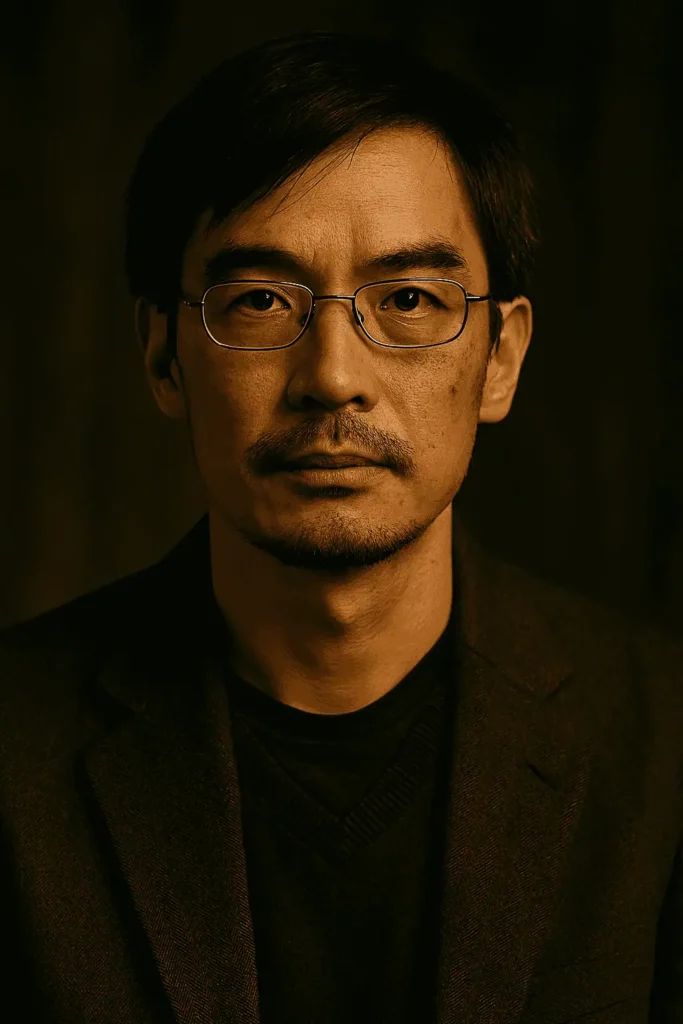
    Terence Tao

    The Modern Mathematical Titan

    Often called the greatest living mathematician, Tao solves problems once considered impossible. His work spans number theory, harmonic analysis, and partial differential equations.

    In a world driven by data, algorithms, and complexity, Tao’s mind is shaping the mathematical foundations of the future.
  • When War Paused for Humanity

    War is usually remembered in numbers, battles, and borders, but the real story often lives in the small human moments that slipped through the cracks. These rare photographs capture the softer edges of conflict: kindness shared between strangers, courage in unexpected forms, and the strange creativity that emerges when the world is falling apart.

    Here are three images that reveal the human side of war.

    British Military Elephant Disguises

    One of the strangest and most charming wartime inventions: elephants disguised with military coverings to blend into the landscape. The photo is both absurd and ingenious, showing how creativity doesn’t disappear during conflict, it mutates. Even in war, humans found ways to adapt, improvise, and sometimes laugh at the surreal tools they created.

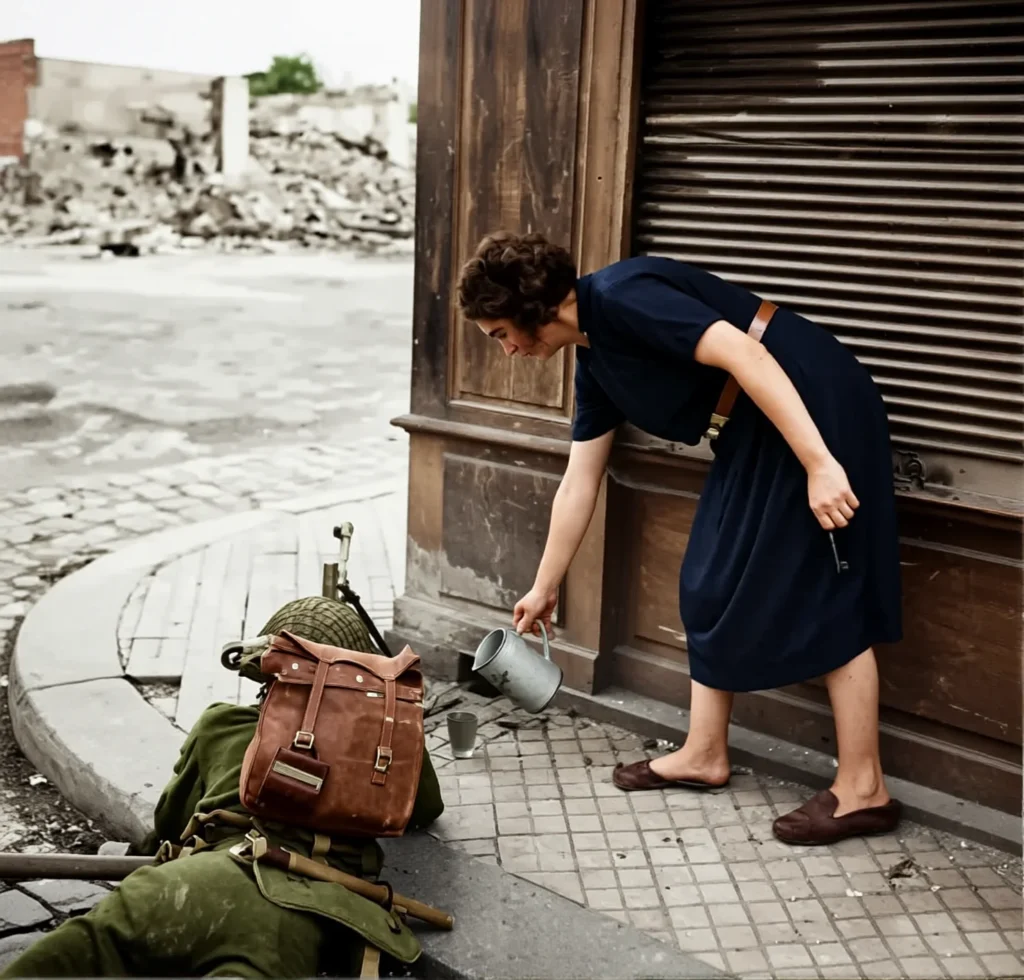
    French Civilian Pouring Cider for a British Soldier

    A quiet act of generosity in the middle of a continent at war. This photograph shows a French civilian offering cider to a British soldier, a reminder that even in the harshest moments, people still reached for connection. It’s a small gesture, but one that cuts through the noise of history with warmth and humanity.

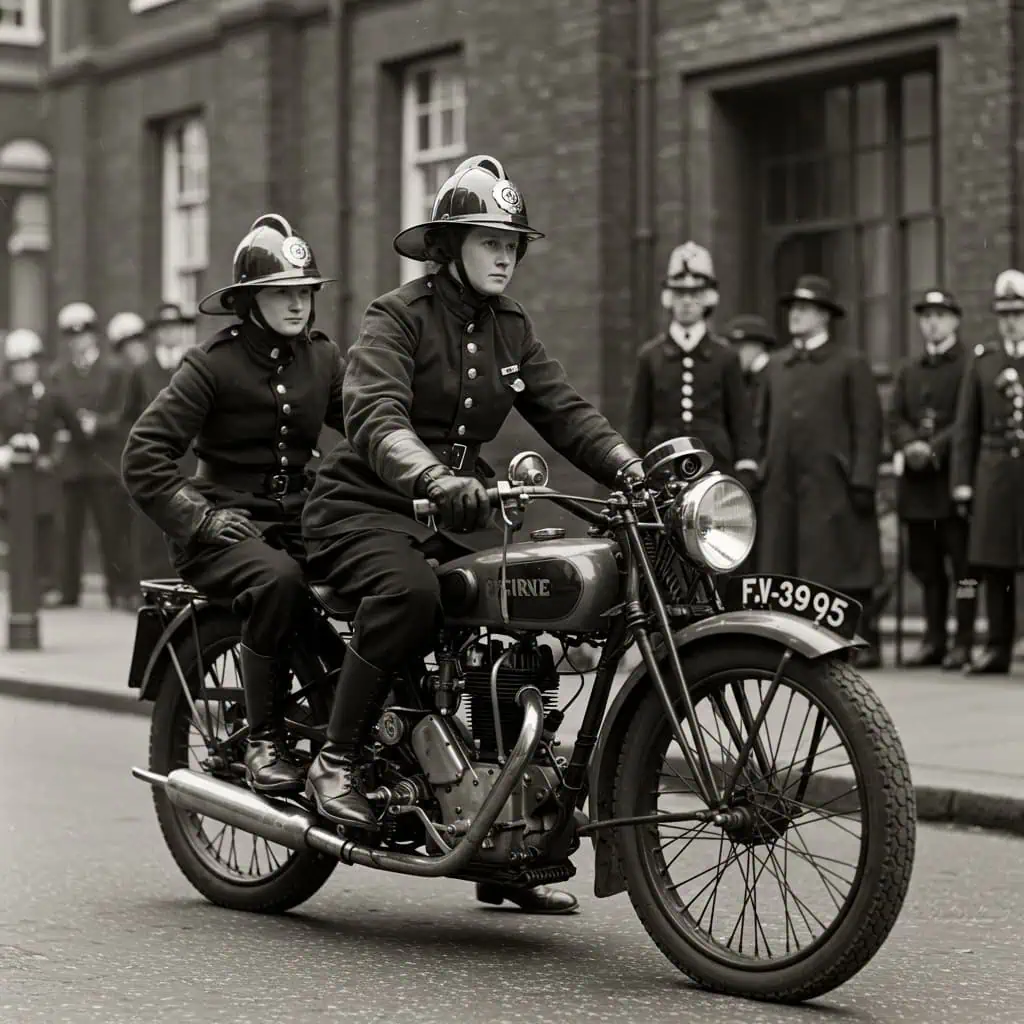
    Female Firefighting Team on a Converted Motorcycle (London, 1932)

    Long before modern emergency response teams, these women rode into danger on a roaring, modified motorcycle built for speed and survival. The image captures grit, innovation, and a kind of courage that rarely makes the history books. It’s a snapshot of women stepping into roles the world wasn’t ready to acknowledge and doing it with absolute resolve.

    These photos remind us that even in the darkest chapters of history, humanity found ways to show kindness, courage, and imagination the parts of us that survive every conflict.

  • The Early World in Three Frames

    Before the world became mapped, measured, and modern, it moved through a rawer, wilder stage, a time when landscapes, cultures, and species were still shaping the identity we now take for granted. These rare photographs capture that early world in transition: a vanished predator, a frontier classroom, and a moment of simple joy from a century ago.

    Here are three images that show the planet before it fully became the one we know.

    The Last Barbary Lion

    A final look at a vanished apex predator: the Barbary lion, once the ruler of North Africa’s mountains and forests. This photograph carries the weight of an ending: a species pushed to the edge by hunting and habitat loss. Its presence is regal, weary, and unforgettable, a reminder that extinction isn’t abstract. It has a face.

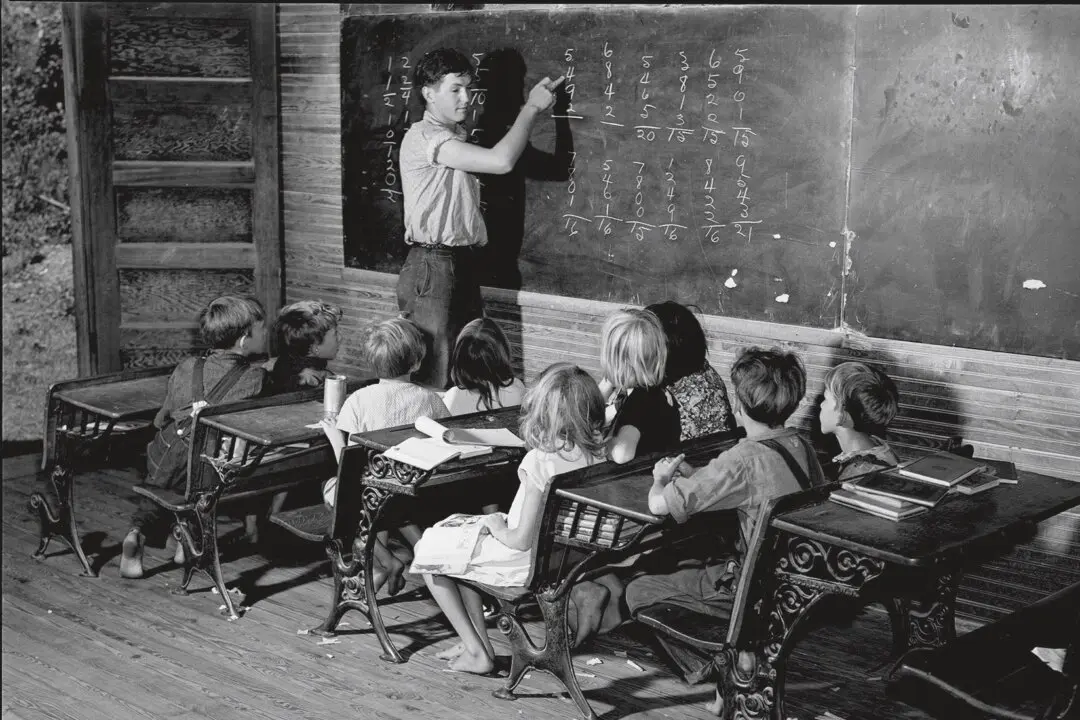
    One‑Room Florida Schoolhouse

    This rare image captures early American life in its most unpolished form: a single‑room schoolhouse built from rough timber, filled with barefoot students and handmade desks. It’s a snapshot of a country still forming its identity where education was simple, local, and shaped by the land itself.

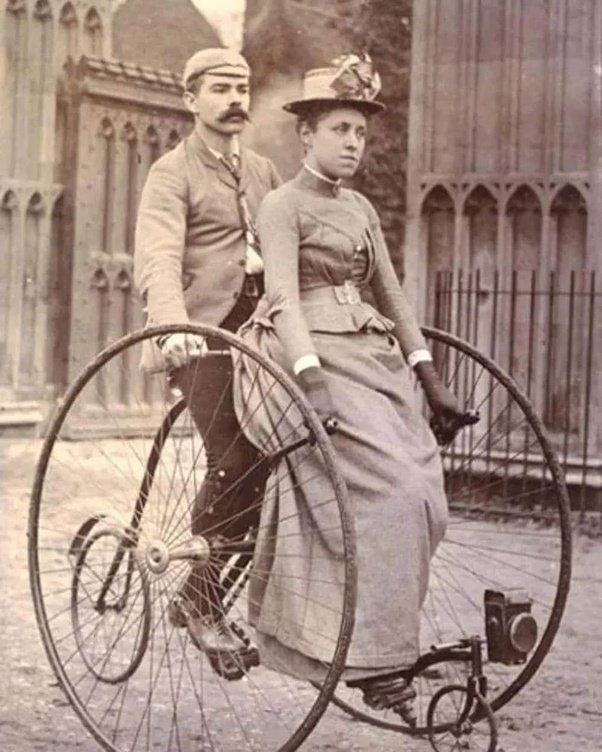
    Victorian Tandem Bicycle Couple

    A playful, almost modern moment from the 1890s: a couple balancing on a tandem bicycle, laughing into the wind. It’s a reminder that curiosity, partnership, and the joy of movement are timeless. Even in a strict Victorian world, people found ways to be young, bold, and alive.

    Together, these photos reveal a world still finding its shape: wild, hopeful, and full of stories that echo into the present.

  • Historical Photos You Wouldn’t Believe Exist

    Some moments in history don’t feel real until you see them. They sit at the edge of belief too daring, too intimate, too strange to fit the version of the past we carry in our heads. Yet the camera caught them anyway, freezing the exact second when the world tilted, when danger brushed against destiny, or when ordinary people found themselves inside extraordinary stories.

    These are the photographs that make time feel alive again.

    Charles Godefroy Flies Through the Arc de Triomphe — Paris, 1919

    Some photos feel staged by destiny. This one is pure defiance.  

    After World War I, pilot Charles Godefroy steered his tiny Nieuport fighter plane straight through the Arc de Triomphe, a stone monument barely wide enough for his wings.  

    The photograph freezes the instant he threads the needle, Paris below him, the world still reeling from war.  

    It’s a reminder that courage and madness often share the same sky.

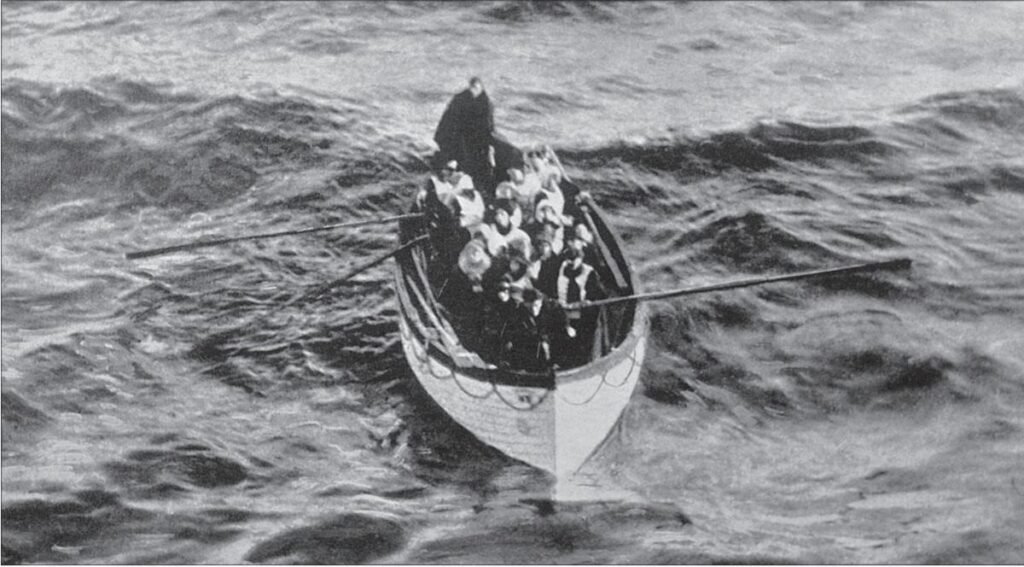
    Titanic Survivors in a Lifeboat — 1912

    The Titanic is usually remembered as a myth, a legend, a cautionary tale.  

    But this photograph brings it back to human scale: exhausted survivors adrift in the North Atlantic, wrapped in blankets, staring into a future they didn’t expect to have.  

    It’s one of the rare images where history’s most famous disaster becomes heartbreakingly intimate, not a ship, but the people who lived through its final night.

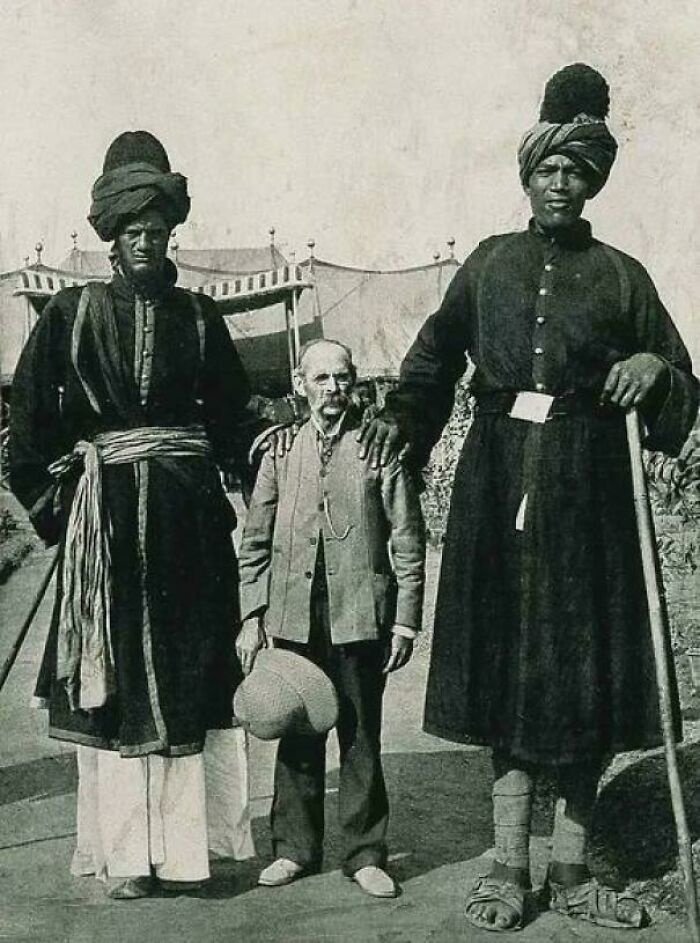
    Two Kashmir Giants With Photographer James Ricalton — Late 1800s

    This is one of those photographs that feels like a fantasy illustration except it’s real.  

    American photographer James Ricalton stands between two towering Kashmiri men whose height seems almost mythic.  

    The contrast is so striking that the image looks manipulated, yet it’s a genuine anthropological snapshot from a world before digital trickery.  

    It’s a portrait of human diversity at its most astonishing.

  • Photos That Show Humanity Learning to Build the Future

    Human innovation didn’t arrive all at once. It came in strange prototypes, bold experiments, and quiet breakthroughs that pushed the world forward one idea at a time. These three rare historical photos capture the exact moments when people were learning how to build the future long before modern technology made it easy.

    Each image is a reminder of how progress really happens: through curiosity, courage, and a willingness to try something no one has seen before.

    Dr. Lewis Sayre Checking Spinal Curvature

    In the 1870s, orthopedic medicine was still in its infancy. This rare photograph of Dr. Lewis Sayre examining a young patient’s spine shows a turning point in medical history — a moment when doctors began shifting from guesswork to structured, anatomical understanding.

    The image is striking because of its simplicity: no machines, no diagnostics, just a physician studying the human body with precision and empathy. It represents the early foundations of modern orthopedic care and the beginning of evidence‑based medicine.

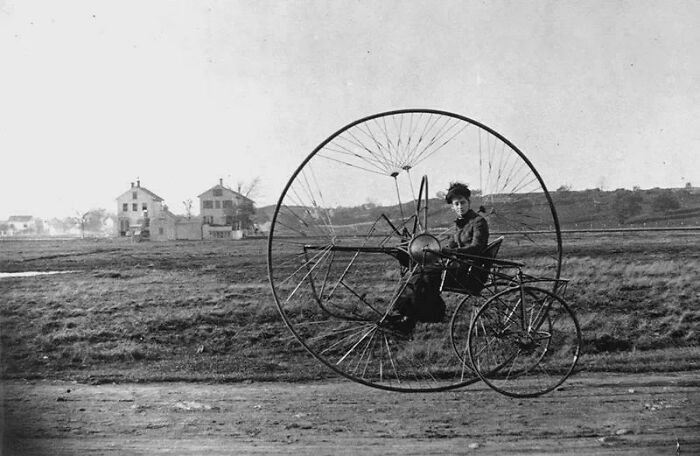
    Oldriev’s New Tricycle

    Before bicycles became sleek and standardized, inventors were experimenting with every shape and mechanism imaginable. Oldriev’s 1882 tricycle is one of the most unusual examples — a three‑wheeled contraption that looks like it rolled straight out of a Victorian engineer’s notebook.

    This photo captures the spirit of early mechanical innovation: bold, awkward, and wonderfully ambitious. It’s a reminder that every modern vehicle, from bikes to electric scooters, began with prototypes that seemed strange at the time.

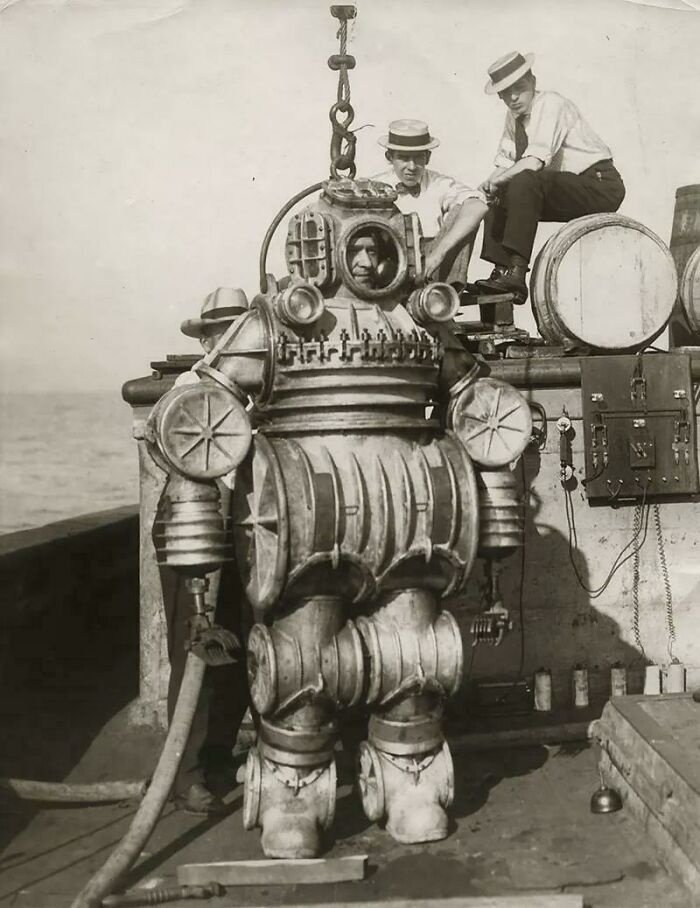
    The Iron Man Diving Suit

    Long before modern scuba gear, engineers were trying to solve the problem of deep‑sea exploration. The “Iron Man” diving suit: a massive metal exoskeleton with jointed limbs was one of the earliest attempts to let humans survive underwater pressure.

    The suit looks almost science‑fictional, yet it represents real technological ambition from a time when the ocean was still a mystery. This photograph shows how far people were willing to go to explore the unknown, even with tools that seem primitive today.

    These three images show the messy, brilliant, human side of innovation. They remind us that progress is about the people who dared to build the first versions.

    From medicine to transportation to deep‑sea exploration, these photos capture the exact moments when humanity took its early steps toward the future we now live in.

  • The Gothic Giants That Refused to Fade

    Gothic cathedrals were statements of faith, ambition, engineering, and the human need to reach upward.  

    Some have faded.  

    A few still rise with the same force they had centuries ago.

    These three continue to define the Gothic spirit.

    Cologne Cathedral — Germany

    Cologne Cathedral is impossible to ignore. Its twin spires cut into the sky at 157 meters, making it the tallest Gothic cathedral in the world. Construction began in 1248, paused for centuries, and wasn’t fully completed until 1880, over 632 years total. Remarkably, the design remained faithful to the original Gothic vision despite the long gap.

    Inside, the scale is overwhelming: a nave stretching 144.5 meters long, stained glass that floods the interior with color, and stonework that feels both heavy and weightless at the same time.

    Cologne Cathedral is a symbol of endurance, a building that took seven centuries but never lost its purpose or identity. It remains one of Germany’s most visited and most beloved landmarks.

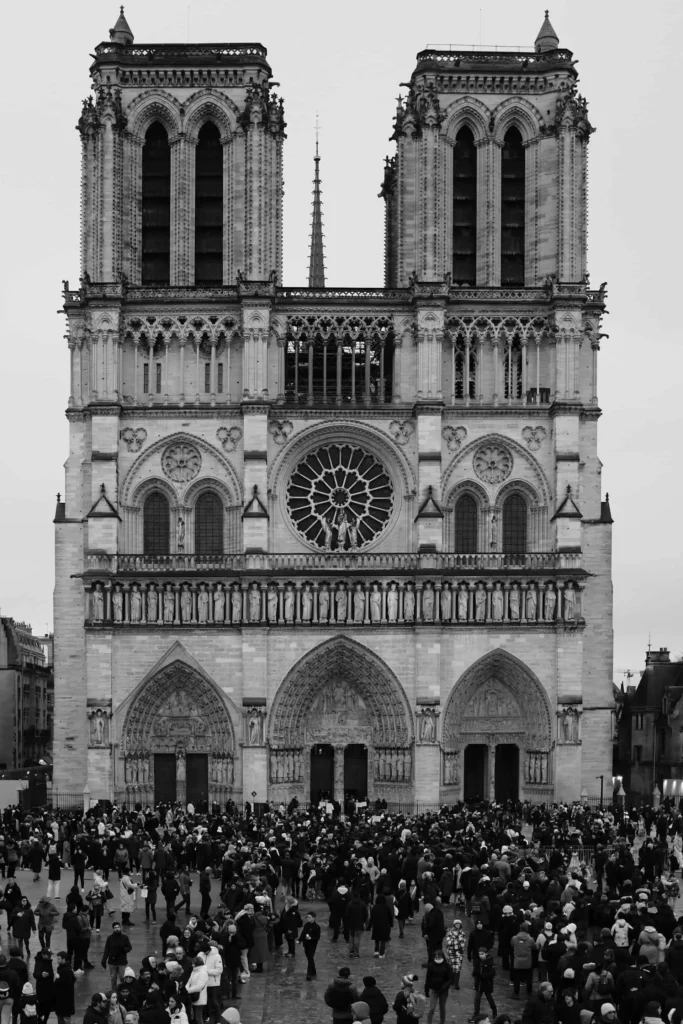
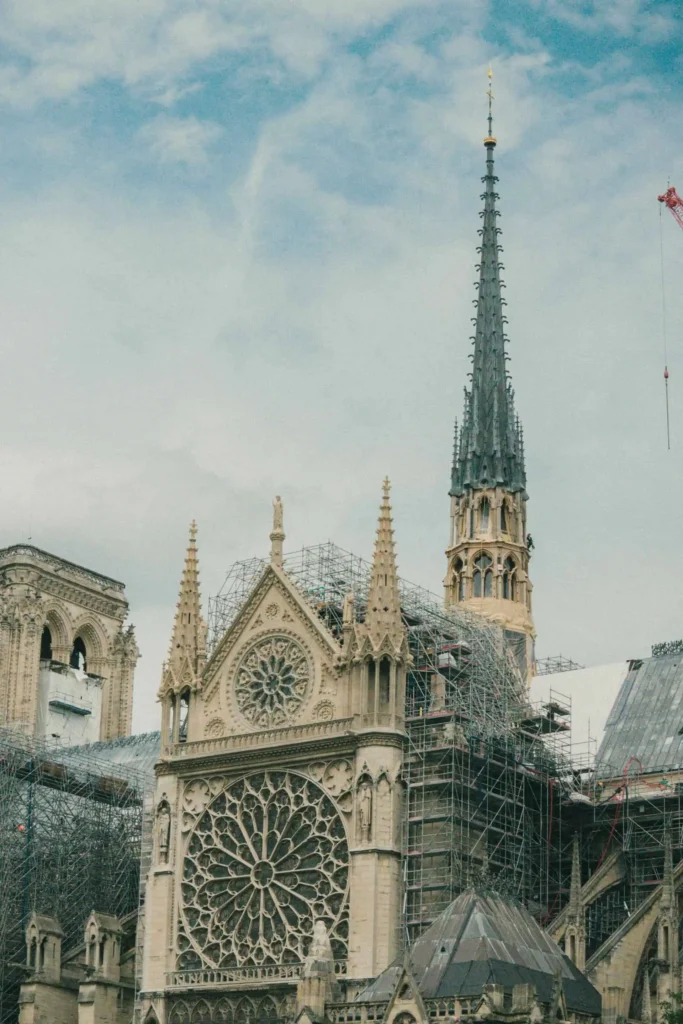
    Notre‑Dame de Paris — France

    Notre‑Dame is the face of Gothic architecture. Built beginning in the 12th century, it introduced the world to the full Gothic toolkit: flying buttresses, rib vaults, pointed arches, and stained‑glass storytelling.

    Its façade is a lesson in balance: statues, portals, and towers arranged with mathematical calm. Inside, the rose windows turn sunlight into something almost alive.

    Notre‑Dame became the model for Gothic cathedrals across Europe. Even after the 2019 fire, its restoration shows how deeply the world still cares about this building and what it represents: resilience, beauty, and shared heritage.

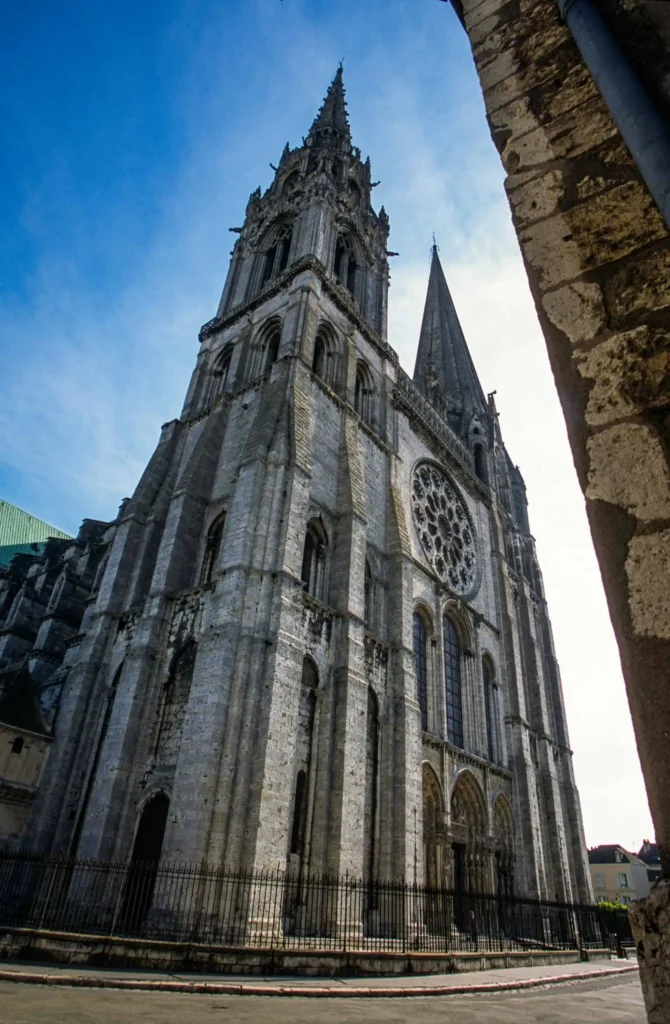
    Chartres Cathedral — France

    Chartres is often called the purest expression of High Gothic design. After a fire in 1194, it was rebuilt with a clarity and unity that few medieval buildings ever achieved. Its stained‑glass windows, many from the 12th and 13th centuries, survive almost entirely intact.

    The cathedral’s structure is a masterclass in Gothic engineering: flying buttresses, quadripartite vaults, and a soaring nave that feels impossibly light.

    Chartres is a UNESCO World Heritage Site and one of the best‑preserved Gothic cathedrals in the world. Its windows alone are considered a treasure of medieval art, telling stories in color that have lasted for 800 years.

  • Ancient Wonders That Still Echo Today

    Some wonders vanish. Others echo through history. These three still shape the world we live in.

    Great Pyramid of Giza – Egypt

    Built around 2600 BCE for Pharaoh Khufu, the Great Pyramid rose to 146 meters and stayed the tallest structure on Earth for nearly 4,000 years. More than 2 million limestone blocks form its core, each placed with a level of precision that still feels impossible.

    Inside, narrow passages lead to the King’s Chamber, built from granite blocks weighing up to 80 tons. Above it, a series of relieving chambers shows a kind of engineering foresight that feels almost modern.

    To the ancient Egyptians, this wasn’t just a tomb. It was Akhet Khufu, the “Horizon of Khufu” a symbol of divine kingship. Today, stripped of its smooth white casing, it still dominates the Giza plateau with the same quiet power.

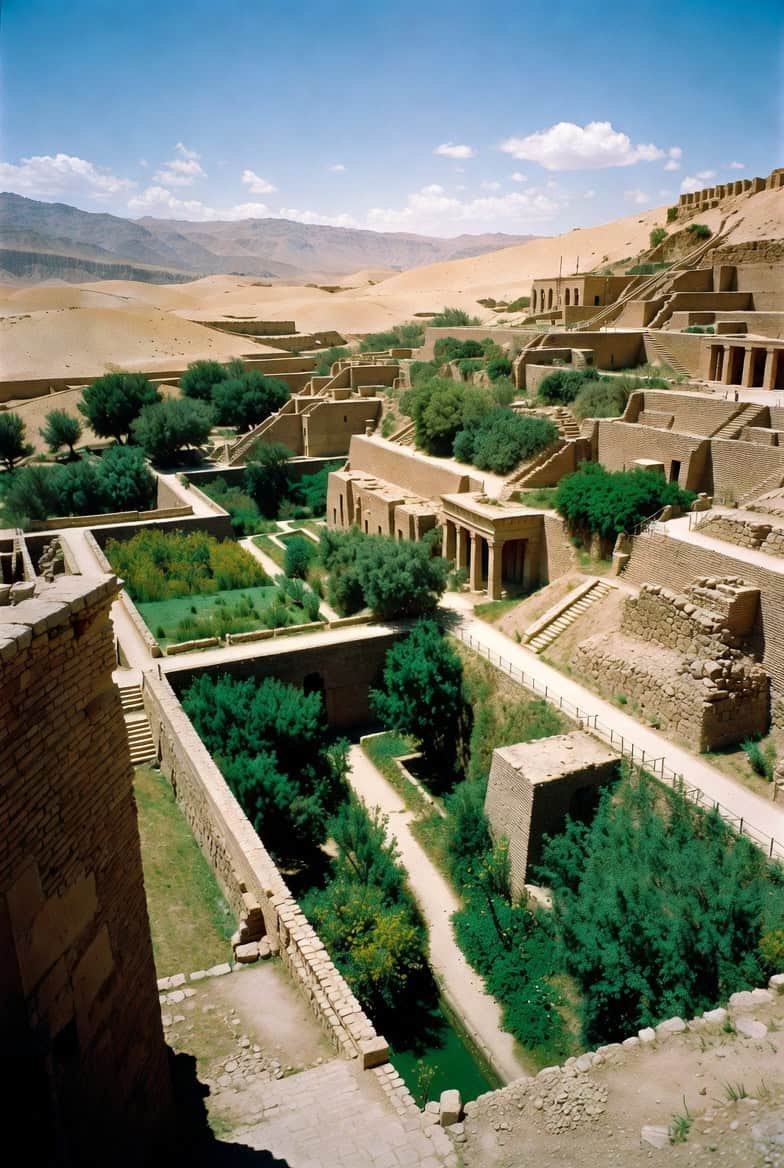
    The Hanging Gardens of Babylon — Iraq

    In ancient Babylon, where heat shimmered off stone and the desert stretched for miles, there was said to be a garden unlike anything the world had seen.

    It didn’t spread outward. It climbed.  

    Terrace by terrace, it rose like a living ziggurat: a mountain of trees, vines, and flowing water built in the heart of the city.

    According to tradition, King Nebuchadnezzar II built it for his wife, Amytis, who missed the green hills of her homeland. So he created new ones for her, not with promises, but with stone, water, and plants gathered from across the empire.

    Whether the gardens truly existed or lived only in memory, the idea endures: a wonder built out of love, engineering, and imagination.

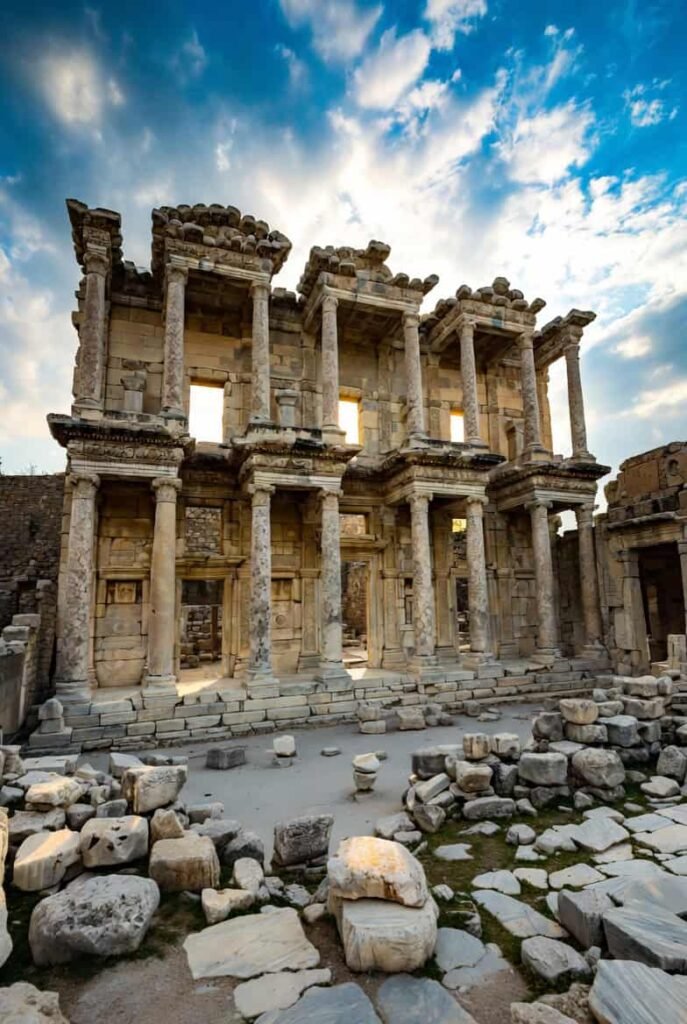
    The Temple of Artemis at Ephesus

    On the western coast of modern Turkey once stood a temple so grand that travelers called it the most beautiful building they had ever seen.

    Dedicated to Artemis, goddess of the hunt and fertility, it was more than a sanctuary. It was a statement of wealth, devotion, and artistic ambition.

    The first version rose in the 6th century BCE, funded by King Croesus of Lydia. After being destroyed, it was rebuilt again and again, each time larger and more impressive.

    The final temple stretched over 350 feet, supported by more than 120 marble columns, each 60 feet tall. Sculptures, gilded details, and sacred art filled its halls, turning it into both a place of worship and a gallery of human achievement.

    Today, only scattered fragments remain. But standing among them, you can still feel the echo of a building that once defined an era.